Featured
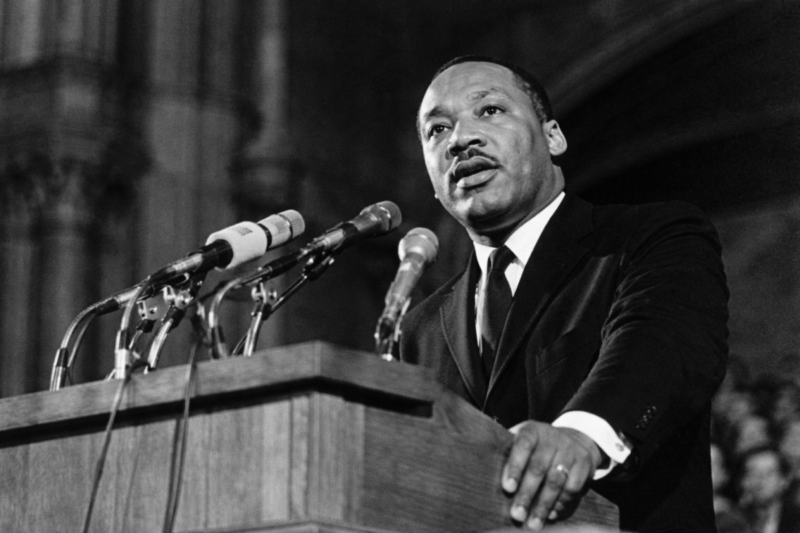 Vietnam Yesterday, Iran Today: Martin Luther King Jr.’s Moral Witness. By Ronald J. Sheehy, Editor / On Race in America
On April 4, 1967, at Riverside Church, Martin Luther King Jr. delivered a speech that shocked much of the nation. In his address, Beyond Vietnam: A Time to Break Silence, King declared that the United States government had become “the greatest purveyor of violence in the world today.”
The reaction was immediate and fierce. Major newspapers criticized him. Political leaders accused him of damaging the civil rights movement. Even some of his allies urged him to remain silent about foreign policy and focus solely on racial justice.
History has largely vindicated King’s courage. The Vietnam War is now widely regarded as a tragic and costly conflict whose justifications were deeply flawed. Yet King’s broader warning remains unresolved. If a nation claims to defend freedom while waging destructive wars, can it preserve its moral authority? That question remains as relevant today as it was in 1967.
Read the full essay:
Vietnam Yesterday, Iran Today: Martin Luther King Jr.’s Moral Witness.
The Week’s Top Stories
Political / Social
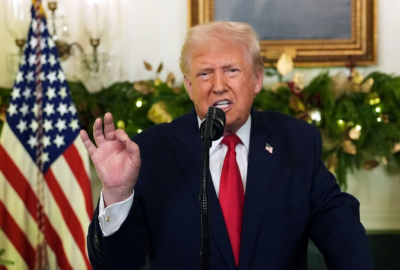 Trump’s moral crusade is dangerous for America — and the world. By Chauncey Devega / Salon
Donald Trump imagines himself as a moral crusader fighting the forces of evil at home and abroad. But his morality is not guided by ethics, humanism or respect for the common good. The president instead relies on himself, something he made explicit in a January 2026 interview with the New York Times. “My own morality,” he replied when asked if he observed any constraints on his power to use the military, including invading other countries. “My own mind. It’s the only thing that can stop me.”
In his mind, Trump is the beginning, end and final judge of what constitutes right and wrong — and he feels free to impose his dogma on America and the rest of the world. His is a totalistic mindset, and it’s one of the defining features of a personality cult like MAGA. Read more
Related: How We’re All Now Paying the Price for the Myth of Trump’s Competence. by Michael Tomasky / TNR
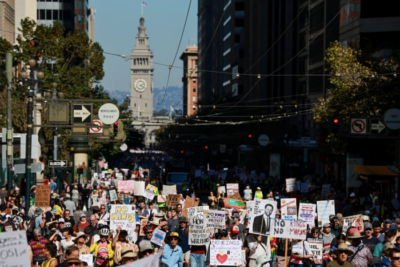 Americans aren’t facing a democratic collapse. We’re living in its aftermath. By Eric Reinhart / The Guardian
The US was an oligarchy well before Trump’s first term. Recognizing this reality is essential to building a true democracy
For tens of millions of people, democratic life has been absent for decades as they endure precarious housing, inaccessible healthcare, unchecked policing powers, debt servitude, vanishing public goods, and near-total exclusion from meaningful formal political power. For others – the wealthy, the politically connected, the donors and oligarchs – the same system produces not insecurity, but insulation, along with a constant need to rationalize the deprivation of others upon which their power is predicated and to disavow any responsibility for it. Read more
Related: The Republican Party as we knew it has ceased to exist. By Thom Hartman / AlterNet
Related: America Isn’t Divided by Race. It’s Divided by Class. By William Spivey / Level Man
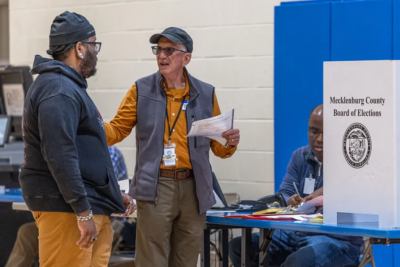 North Carolina Tried To Make Black, Brown, And Low-Income Voters Invisible Before The Primary. Here’s How We Fought Back. By Ashley Mitchell / Newsone
In the weeks before North Carolina’s primary, two things happened that many voters never heard about, and together, they tell you everything you need to know about the state of voting rights in this state.
First, just weeks before the primary election, the State Board of Elections (SBE) sent approximately 241,000 letters to registered voters, a list overrepresented by Black and brown voters, suggesting that their registrations may be invalid and causing concerns among voters that they could be turned away at the polls. Next, we were faced with the elimination of Sunday voting in multiple counties and the closure of Early Voting sites on multiple college campuses– including the nation’s largest HBCU. Read more
Related: ICE Poses a Real Threat to Our Elections. By Domenic Powell / The Intercept
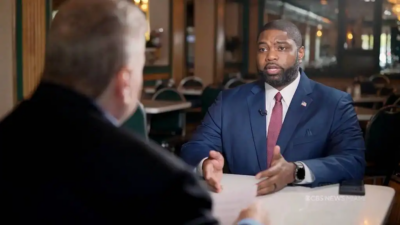 Full interview: Byron Donalds opens up about his past and Florida politics. By Jim DeFede / CBS News
On Monday, March 2, 2026, CBS News Miami sat down with Republican Congressman Byron Donalds, the leading Republican candidate for governor in Florida, to discuss a wide range of issues, including the early years of his life, being raised by a single mother, and his arrest on marijuana charges where he acknowledged for the first time that as a teenager he actually sold drugs.
Donalds spoke about how his arrest caused him to change his life and he addresses criticism that he was being hypocritical for sponsoring a crime bill in Congress that would deny young adults the same mercy and grace he received from the courts in Florida after he was arrested. The interview also covers his thoughts on possibly being the first black, Republican governor of a Southern state. Read more
Related: Rep. James Clyburn announces he will seek reelection. By Jennifer Bendery / MSN
 Black Folks Fear the Worst Is Already Here. By Asheea Smith / The Root
From escalating conflicts abroad and AI taking over jobs to attacks on Black history and voting access, these 13 developments show why Americans—especially Black communities—are bracing for the crises they’ve long feared.
For years, many Americans—especially Black folks—have had the uneasy feeling that something big is coming, leaving people bracing for the worst. The politics feel meaner. Racism is blatant like this is 1950. Technology is moving faster than jobs are created. WWIII feels like it’s around the corner, and folks are battling crippling anxiety under the pressure. We’ve not even mentioned that Project 2025 has been a success in the worst way. Old church folks swear we are in the last days. Now, the world seems one crisis away from absolute chaos. Read more
Education
 Florida Has Deemed All Existing Intro to Sociology Textbooks Illegal and Produced Its Own. By Zachary Levenson / Znetwork
The working group entirely jettisoned whole chapters on race and ethnicity, gender and sexuality, social stratification, and global inequality. Words like “racism” and “discrimination,” which appeared roughly 120 times each in the original, now appear 25 times combined. Countless additional topics were cut, or else mangled, and most comparisons of the U.S. to other countries were removed.
Then, immediately before winter break, in mid-December 2025, my department’s chair received a call from the provost, who had in turn been called by a staffer from the Florida Board of Governors’ office. The chair proceeded to call each faculty member who was scheduled to teach Intro to Sociology, asking them to use the state-created, censored textbook. Read more
Related: FIU professors weigh showdown with DeSantis over ‘censored’ sociology course. By and
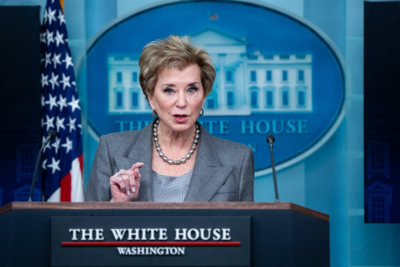 Democratic States Sue Over Trump Demand That Colleges Provide Race Data. Vimal Patel and Stephanie Saul / NYT
The Trump administration wants colleges and universities to share information about the race and gender of applicants to make sure they’re not using racial preferences in admissions.
The Trump administration announced in August that schools would be required to report disaggregated data on the race, gender, test scores and grade point averages of applicants. Linda McMahon, the secretary of education, argued that the new requirements were a way to scrutinize whether colleges were abiding by a 2023 U.S. Supreme Court ruling that outlawed race-conscious admissions. Read more
Related: How the DOJ is using civil rights law to attack school desegregation. By Russell Payne / Salon
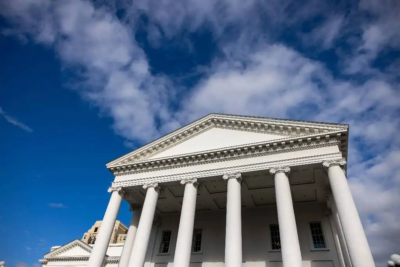 Virginia passes legislation banning schools from teaching falsehoods about Jan. 6. By Scott MacFarlane / CBS News
Virginia’s legislature has passed a bill prohibiting schools from teaching what it considers to be falsehoods about the Jan. 6, 2021, U.S. Capitol riot, including portraying it “as peaceful protest.”
The General Assembly approved the measure Thursday, as a first-of-its-kind legislation to combat false statements by supporters of President Trump. The bill says that school instruction must “Not describe, portray, or present as credible a description or portrayal of the actions precipitating or involved in the events of the January 6, 2021, insurrection as peaceful protest.” Read more
World
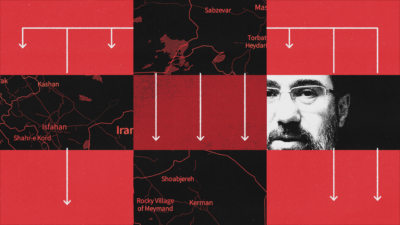 The Iranian Regime Doubles Down. By Karim Sadjadpour / The Atlantic
Trump was hoping for an Iranian Delcy Rodríguez. Instead, he may have produced an Iranian Kim Jong Un.
Less than two weeks into the American and Israeli bombardment of Iran, the war is both a success and a failure. Militarily, the campaign has effectively degraded the Islamic Republic’s warmaking capacities. But politically, thus far, it has only strengthened the regime’s cohesion. Read more
Related: Iran’s Real ‘Nuclear Option’ Isn’t A Bomb—It’s The Strait Of Hormuz. By Robert Rapier / Forbes
 America vs. the World. By Robert Kagan / The Atlantic
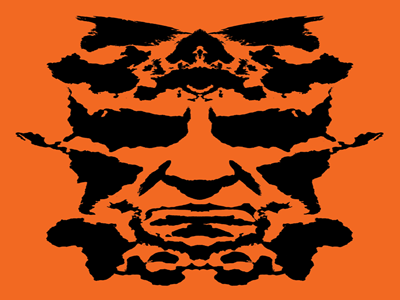
President Trump wants to return to the 19th century’s international order. He will leave America less prosperous—and the whole world less secure.
The Trump administration’s National Security Strategy made it official: The American-dominated liberal world order is over. This is not because the United States proved materially incapable of sustaining it. Rather, the American order is over because the United States has decided that it no longer wishes to play its historically unprecedented role of providing global security. The American might that upheld the world order of the past 80 years will now be used instead to destroy it. Read more
Related: One President’s Whim. A World in Crisis. Michelle Cottle, Jamelle Bouie and David French / NYT
Related: Trump and Hegseth are writing their own rules of war. By Heather Digby Parton / Salon
 Trump Isn’t Ready for What He’s Starting in Cuba. BChristopher Sabatini and
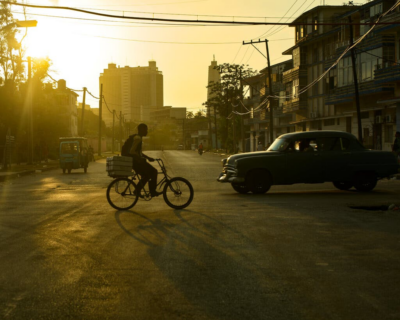
In the wake of the Trump administration’s removal of President Nicolás Maduro from Venezuela and amid the U.S. bombing campaign in Iran, it may soon be Cuba’s turn.
Less than two months after imposing a brutal oil blockade on the island in order to maximize pressure on the government, President Trump is now bragging that the Cuban regime is on the verge of collapse and that its leaders want to “make a deal.” Any resolution forged in the current standoff between Washington and Havana risks being a hollow victory, offering only a temporary reprieve for Cubans and a fleeting achievement for an administration that has yet to define what lasting success in Cuba looks like. Read more
 How the US far right bought into the myth of white South Africa’s persecution. By Eve Fairbanks / The Guardian
There’s a little town in the scrub in South Africa – a full day’s drive from the country’s big cities – that has become perhaps the most scrutinised place on earth, given its size. It is 9 sq km (3.5 sq miles) of suburban-style houses harbouring about 3,000 people, with a main drag, a municipal swimming pool, one gas station and some pecan farms.
No people of colour are allowed to live in the town, called Orania. The name is a nod to the river that runs nearby. Orania’s founders established it in 1991, the year after South Africa’s best-known Black liberation leader (and future president), Nelson Mandela, was freed following 27 years in prison. Understanding that Mandela’s liberation meant that white-minority rule was coming to an end, the founders trekked into the desert, bought a disused mining town wholesale and established a colony. Read more
 Appeals Court Upholds Protected Status for 350,000 Haitians. Miriam Jordan / NYT
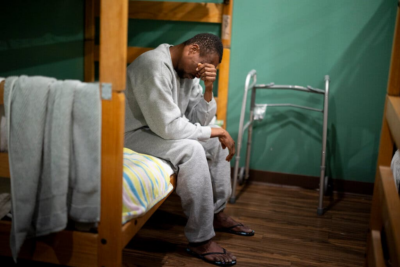
The D.C. Circuit ruled against the Trump administration, ensuring Haitians can remain in the United States and keep working while the underlying lawsuit proceeds.
The 2-to-1 ruling allows the over 350,000 Haitians in the United States covered by T.P.S. to remain shielded from deportation, continue to work legally and maintain their protected status while a lawsuit challenging the termination proceeds in federal court. The latest ruling came from the U.S. Court of Appeals for the D.C. Circuit. Read more
Ethics / Morality / Religion
 Republican says ‘Muslims don’t belong in American society,’ draws fierce Democratic backlash. By Alex Nitzberg / Fox News
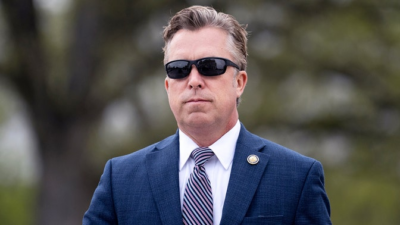
Republican Rep. Andy Ogles of Tennessee declared in a post on X that “Muslims don’t belong in American society,” and later defended his remarks as Democrats condemned them.
House Minority Leader Hakeem Jeffries, D-N.Y., slammed the GOP lawmaker. “Andy Ogles is a malignant clown and pathological liar who has fabricated his whole life story. Disgusting Islamophobes like you do not belong in Congress or in civilized society. And that’s why House Democrats will defeat you in November,” Jeffries wrote on X. Read more
Related: Trump’s misguided “Christian” war is anything but. By Kirk Swearingen / Salon
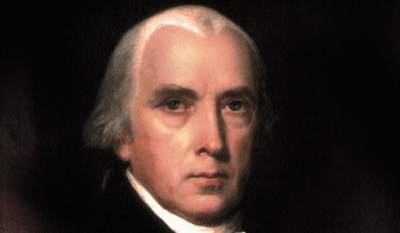 What James Madison can teach Americans about religious freedom today. By Covey D. B. Walker / The Conversation
As the United States marks the 250th anniversary of the Declaration of Independence, debates about religious freedom continue to occupy the center of American public life.
Since taking office for a second time, the Trump administration has issued a number of executive orders on religion that raise new questions about religious freedom. On May 1, 2025, the administration established the Religious Liberty Commission. The commission will advise the White House on policies intended to protect the free exercise of religion and to prevent discrimination against people of faith by the federal government. The administration has also issued executive orders to “eradicate anti-Christian bias” and to broaden protections against religious discrimination across federal agencies. Read more
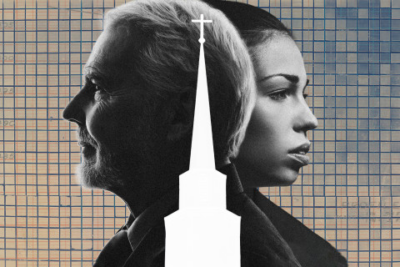 Amid cruelty and oppression, can the church be faithful at human scale? By C. Andrew Doyle / Christian Century
Every so often, the levers of power in this country begin speaking a strange moral language, one impatient with persons and fluent in categories rather than faces. It speaks of order while practicing cruelty. It names enemies while erasing faces. We live in such a season now.
Ordinary rights are being suspended for migrants and asylum seekers—many of whom entered legally, filed their papers, and waited years for hearings this government never scheduled. Agents are now authorized to detain and deport in churches, courthouses, and schools. Coercive force is normalized in the name of order. This moment demands clarity from the church: lines drawn, principles defended, prophetic imagination. But it also presses a more uncomfortable question: What kind of people are we becoming while this violence is normalized? Read more
Historical / Cultural
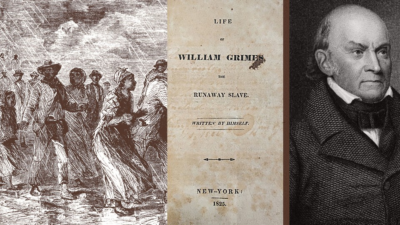 The Fugitive Slave Who Wrote to the President. By Regina E. Mason / The Atlantic
What William Grimes wanted John Quincy Adams to know about freedom on the 50th anniversary of the country’s founding
In 1825, Life of William Grimes, the Runaway Slave, Written by Himself became the first known fugitive-slave narrative in American history. Although earlier autobiographical accounts of slavery had been published in England, the genre wouldn’t fully flourish in the United States until the antislavery movement of the 1830s to 1860s, when such narratives became powerful tools of moral persuasion, exposing the brutality of bondage while asserting the writer’s humanity, intellect, and will. William Grimes wrote before that moment, introducing a distinctly American voice shaped by the horrors of enslavement in the South and the precariousness of freedom in the North. What he published was more than a memoir—it was an indictment of the contradictions that had been central to the American experiment since the Revolution itself. Read more
Related: Documentary explores Louisiana slave sale that saved Georgetown University. By David Hammer WWL TV
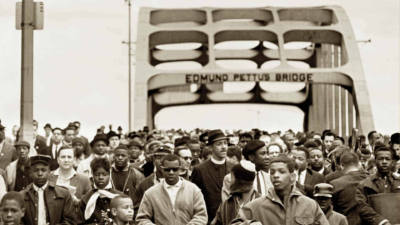 Selma Was Not Just History, It Was a Warning. By Tre’ Murphy / The Root
Sixty-one years after “Bloody Sunday” in Selma, we are once again watching the machinery of state violence turn toward Black and Brown communities.
Sixty-one years ago, on March 7, 1965, 600 people stepped onto the Edmund Pettus Bridge in Selma, Alabama. They marched for the simple promise of democracy: the right to vote. What met them was not dialogue but violence — billy clubs, tear gas, mounted troopers. “Bloody Sunday” forced the nation to confront two truths: the brutality of racial discrimination and the power of coordinated Black organizing. Read more
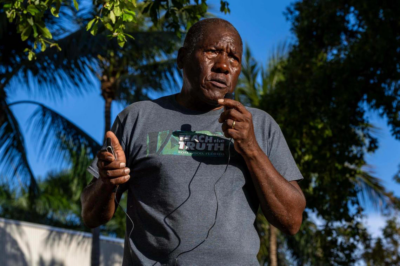 ‘Simply tell the truth’: Miami historian creates Black history textbook for kids. By Raisa Habersham / Miami Herald
Historian and activist Marvin Dunn’s job is to bring Florida’s Black history to life — whether through his Teach the Truth Tours, the under the Black history tree at Florida International University, speaking at schools about racism and discrimination, or through the many protests he’s held to fight injustices.
Now, Dunn, an 85-year-old Florida native and former professor at Florida International University, has detailed his research and findings in a textbook geared toward middle school children, with the hopes they will learn the state’s Black history — the painful parts and the triumphs— and understand how it informs their future. Read more
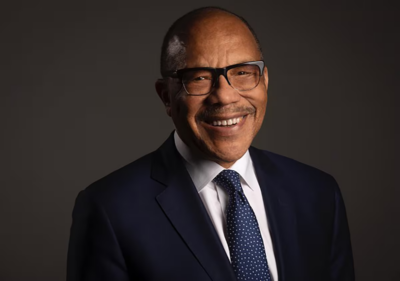 Eugene Robinson’s family story reflects radical American optimism. By Matthew F. Delmont / Wash Post
In “Freedom Lost, Freedom Won,” the former Washington Post columnist tells the story of the country through the lives of his ancestors.
In “Freedom Lost, Freedom Won,” Eugene Robinson writes that his great-grandfather John Hammond Fordham was probably among the crowd on and watched in awe as history unfolded before his 11-year-old eyes. When the Union Army seized Charleston, South Carolina, on Feb. 18, 1865, Black troops led the way. “Everything I know about him,” Robinson writes, “tells me that he watched those Black victors march into town and saw a bright and limitless future.” Read more
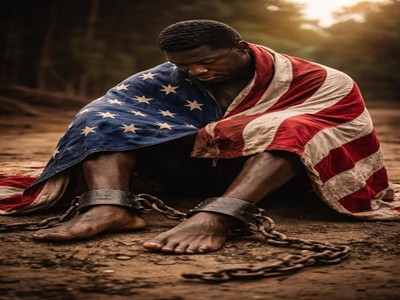 Why Confronting Racism Feel Unpatriotic. By Jeffrey Kass / Level Man
The deeper problem with American mythology isn’t merely failing to recognize that other nations have something to teach us. It’s how that mythology prevents our own growth.
Our obsession with American superiority functions as a protective shield. If the nation’s past is primarily viewed as a steady march of progress and freedom, then honest discussions of racism can feel like attacks on national identity. This defensiveness fuels resistance to teaching Black history in full context, or to examining how race continues to shape housing, policing, health care, and wealth. Read more
 ‘A New Day Begun’ Traces The Origins Of The Black National Anthem. By NewsOne Staff / Newsone
Keith Brown’s documentary ‘A New Day Begun’ charts the 126-year history of the song to answer a key question: What does a new day mean?
“Lift Every Voice and Sing,” also known as the Black National Anthem, has long been a staple in Black culture. From church ceremonies, HBCU graduations, to Beyoncé’s Coachella performance, the Black National Anthem has become nearly as ubiquitous as “The Star Spangled Banner.” Filmmaker Keith Brown made the documentary A New Day Begun to examine the song’s history and why it has endured for so long. Read more
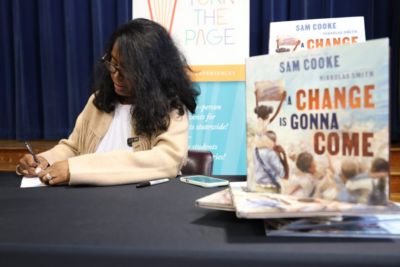 More Than a Singer: How Sam Cooke’s Family Built a Legacy After His Death. By Aallyah Wright / Capital B
The family of the writer of “A Change Is Gonna Come” is ensuring his activism and business acumen live on.
Nicole Cooke-Johnson loaded her car full of children’s books and traveled to her grandfather’s hometown, Clarksdale, Mississippi, for the first time in her life. It was a journey as old and as common as the Great Migration. But her grandfather, Sam Cooke, was no ordinary man. Cooke, an iconic, groundbreaking recording artist of the 1950s and ’60s, is considered a pioneer of soul music. Cooke-Johnson never got to meet her grandfather. At 33, he was shot and killed at a Los Angeles motel in 1964 under a cloud of circumstances that have haunted his fans for more than 50 years. But the Cooke family is alive and well, thriving partly because Cooke had the foresight to launch his own record label and own his own music, producing generational wealth for the family. Read more
Sports
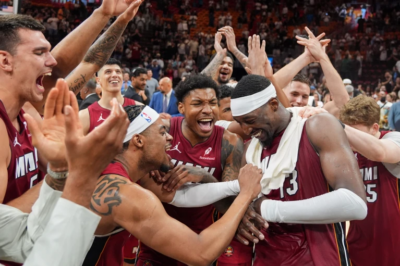 Bam! Heat’s Adebayo scores 83 points, 2nd only to Wilt Chamberlain in NBA history. By Tim Reynolds / AP
Bam Adebayo had a night for all time on Tuesday, with a point total second to only Wilt Chamberlain in the NBA record books. Adebayo scored 83 points, setting league marks for free throws made and attempted in a game for the Miami Heat in a 150-129 win over the Washington Wizards.
“An absolutely surreal night,” Heat coach Erik Spoelstra said. “Obviously, we’ve been blessed to have been part of a lot of big moments in this arena. This one, it just happened. Moments happen and I’m grateful that we’re all able to be a part of it and witness it.” Chamberlain’s record of 100 points has stood since 1962. Kobe Bryant — one of Adebayo’s basketball heroes — was No. 2 on the list with 81. Adebayo never thought he’d be in that club. Read more
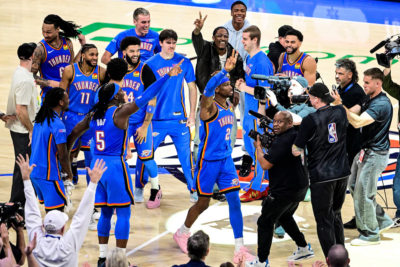 Inside the numbers: Shai Gilgeous-Alexander ties Wilt Chamberlain’s 20-point streak record. By Tim Reynolds / Wash Post
Wilt Chamberlain has some NBA records that might never get touched, like the 100-point game, 4,000 points in a season and a 50-point-per-game scoring average
Oklahoma City’s Shai Gilgeous-Alexander has now done just that, matching Chamberlain’s NBA record of 126 consecutive regular-season games of 20 or more points . Gilgeous-Alexander got there Monday night, scoring 35 points (with a career-high 15 assists, too) in the Thunder’s 129-126 win over the Denver Nuggets . Read more
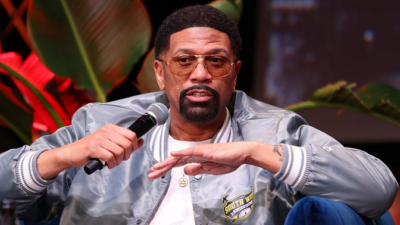 Ex-NBA star claims there’s ‘residue of slavery’ in pro sports leagues that have salary caps. By Ryan Gaydos / Fox News
Rose appeared on a live edition of the “Joe and Jada Unfiltered” podcast last week and said the “only sports that have salary caps are Black led” as he talked about his problem with the system. He named leagues like MLB, NASCAR, golf and tennis that do not have salary caps. Though he failed to mention that the NHL has a salary cap as roughly two dozen NHL players are Black.
“The second thing is they have no after high school restrictions,” he continued. “So, that’s a residue of slavery because we’re going to get money off of you for multiple years for free. There’s no way around it. So, what happened in the game, it became so obvious because of social media and because of information, it’s like ‘We’re making a billion dollars, we gotta pay them something.’ That’s how it ended up happening.” Read more
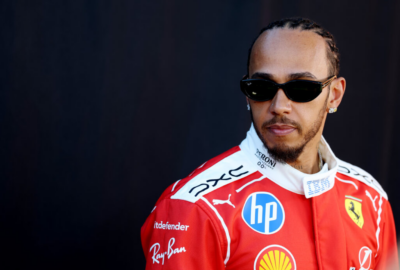 F1 Champion Lewis Hamilton Calls for a Movement to ‘Take Africa Back’ as He Tries to Bring Racing to the Continent. By
The first and only Black driver in F1 history is empowering the people of the continent to “take Africa back” from European powers.
Lewis Hamilton is a seven-time world champion who has competed against drivers from around the globe. One of the biggest elephants in any room he steps into, however, remains an overall lack of Black representation in the sport he dominates. Now, Hamilton has plans to change this. Read more
Site Information
On Race in America is published every Saturday. Some articles may be AI-assisted. Articles appearing in On Race in America are archived on our home page. A collection of Books, Podcasts, and Video Favorites can also be found there.
On each page you can register your email to receive notifications of new editions of On Race in America.
Click here for earlier Editions
The site is fully searchable by name or topic—see the Search option at the top of the page. At the bottom of the page, you’ll find custom share buttons that let you email the edition or post it directly to your Facebook, LinkedIn, or X (formerly Twitter) accounts.