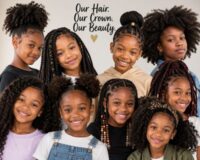
 More than 70 percent of Black women use hair extensions at least once a year. Many of those products — including braiding hair, wigs, and extensions — contain dozens of potentially harmful chemicals. Studies have also linked frequent use of chemical relaxers to a higher risk of uterine cancer. A February 2026 study published in the Environment & Health journal identified dozens of hazardous chemicals in commonly used hair extensions, including substances linked to cancer and hormone disruption. These findings add to growing concern about the long-term safety of products marketed specifically to Black women.
But this is not just a health issue. It is also about self-esteem.
For Black girls, hair has long been a quiet battleground. Beauty standards in America have historically centered white women’s straight hair, sending an unspoken message that natural Black textures are something to be managed or hidden.
That pressure has deep roots. In the early 20th century, straightening was often necessary for economic survival. The 1960s briefly disrupted that standard, as the Afro became a symbol of pride and liberation. But by the 1980s and 1990s, straightened styles and long weaves again dominated popular culture, restoring the old hierarchy.
Wigs, weaves, and extensions can be creative and versatile. Performers like Beyoncé use wigs as part of artistic expression. But the issue is not style — it is dependence. When these choices become necessary for confidence, the cost is psychological. A girl who feels she cannot show up in her natural hair without judgment learns to tie her worth to external alteration and constant comparison.
Today, that pressure carries an added dimension. The growing evidence of chemical exposure raises a difficult question: why have so many Black women been willing to accept potential physical risk in pursuit of these standards? The answer lies in decades of conditioning that linked beauty and opportunity to distance from natural Black features.
There has been progress. The natural hair movement and laws such as the CROWN Act have helped challenge these norms. But the emotional legacy remains.
Black girls should never be shamed for wearing braids, wigs, or weaves. Choice matters. But real freedom begins with a stronger foundation: learning to love the crown they were born with. When natural hair is embraced first, every other style becomes an option, not an obligation.
The debate over hair is not just about style. It is about dignity, health, and self-worth. Until Black girls can see their natural selves as fully worthy — without comparison — the pressure to alter, and the risks that come with it, will remain.
If this essay mattered to you, future work from On Race in America is delivered directly by email.