Featured
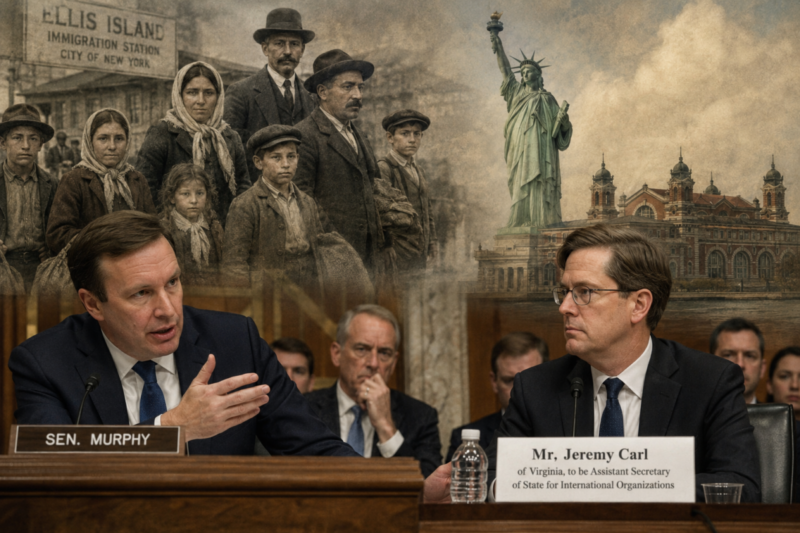 Interrogating Whiteness in American History and Life. By Ronald J. Sheehy, Editor / On Race in America
The question of whiteness has moved from the margins of academic discourse to the center of American political debate. Once treated as an invisible norm rather than a distinct identity, whiteness is increasingly invoked in discussions of culture, immigration, demographic change, and national belonging. Yet for all the attention it receives, the idea of whiteness remains surprisingly elusive. A recent Senate hearing exposed that difficulty and raised a larger question: Is whiteness a culture, an identity, or a historical phenomenon? Examining that question requires looking beyond contemporary politics to the history of how whiteness was constructed, expanded, and intertwined with the meaning of being American.
Read complete essay. Interrogating Whiteness in American History and Life. By Ronald J. Sheehy, Editor / On Race in America
The Week’s Top Stories
Political / Social
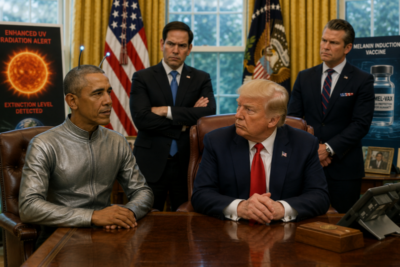 Take Me to Your Leader: An Alien Solution to America’s Oldest Problem. By Ronald J. Sheehy, Editor / On Race in America
What if an alien civilization arrived on Earth with a gift that could save humanity—but at the cost of eliminating one of our oldest social divisions? This satirical story uses science fiction to explore a serious question: How much of what separates us exists because of our conditioning?
Read complete essay. Take Me to Your Leader: An Alien Solution to America’s Oldest Problem. By Ronald J. Sheehy, Editor / On Race in America
 America Broke Something When It Gave Trump a Second Chance. By Jamelle Bouie / NYT
The Heritage Foundation’s “Mandate for Leadership: The Conservative Promise” — popularly known as Project 2025 — was much more than a wish list of conservative policy preferences. It was much more, even, than a blueprint for a second Trump administration.
Project 2025 was, above all, a statement of values and a theory of governance. Its authors did not simply want to move national policymaking to the right. They wanted to use the authority of the executive branch to impose a new regime on the United States. Read more
Related: Trump is the nightmare America needed to wake up. By Robert Reich / Alternet
 America Is Due for a Deep Clean. By William J. Barber / The Nation
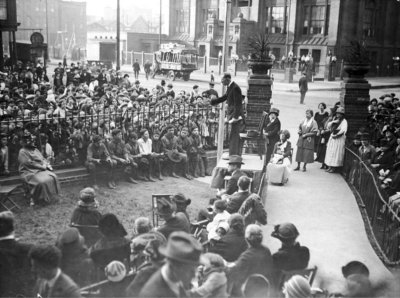
I love America—the place where I was born, the people who have loved me, the songs that have shaped my soundscape, and the story in which I’ve had to negotiate my own existence. I also know America well enough to know her deepest flaws, and I know she will never be all that she aspires to be until she repents of the marginalization of some people from her beginning. The minister and reformer Graham Taylor, shown here addressing a crowd in Chicago in 1924, was one of the many activists who have sought to push this nation toward greater justice.
Langston Hughes wrote, “America never was America to me, / And yet I swear this oath— / America will be!” At this 250th anniversary of the Declaration of Independence, we have a nation we love, founded on a great dream and the words of men who, even when they signed their names, knew that they were empty phrases for poor men, women, Indigenous people, and Black people. Read more
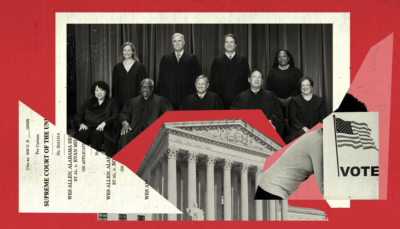 The Supreme Court’s Latest Blow to Black Voters’ Rights. Ruth Marcus / The New Yorker
An unsigned order in an Alabama case rewards the state for engaging in what a lower court called “intentional racial discrimination.”
More than a quarter of Alabama’s residents are Black, but, with the Court’s intervention, just one of the state’s seven congressional districts is likely to be held next year by a Black representative. This outcome will be no accident. Read More
Related: The Supreme Court’s Voting Rights Decision Is Worse Than You Think. By Rekha Kennedy / TNR
Related: Booker pours six figures into defending Black representation. Hunter Woodall / MS NOW
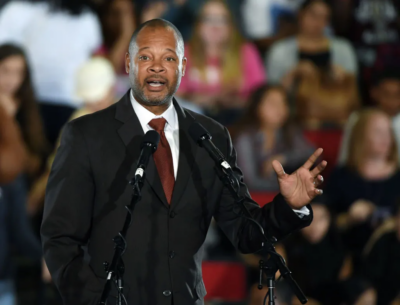 Who Is Aaron Ford? The Man One Step Away From Becoming Nevada’s First Black Governor. By Sammy Approved /Newsone
History does not always announce itself loudly. Sometimes it arrives through a primary win in the Nevada heat on a Tuesday night in June, with a man standing at a victory party making a promise to the working-class voters who put him there.
Aaron Ford just won the Democratic nomination for governor of Nevada and if he wins in November, he will become the state’s first Black governor in its entire history. Read more about Aaron Ford inside. Read more
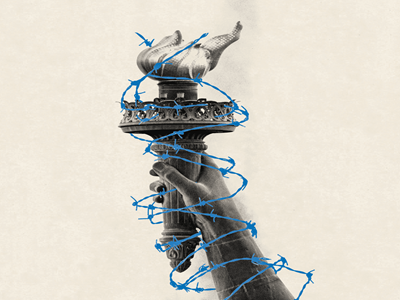 For the Nation’s Birthday, Making It Harder to Become an American. Jonathan Blitzer / The NewYorker
The Trump Administration has chosen to honor the Semiquincentennial of a nation of immigrants with a vision that sends the country back in time.
Stephen Miller, Trump’s top domestic-policy adviser, has presided over the most concerted effort in a century to recast citizenship as a tool of systematic exclusion. Under his direction, the Administration has chosen to honor the Semiquincentennial by keeping people from entering the United States, by restricting those who have already done so from becoming full citizens, and by trying to strip naturalized citizens of their legal status. It is a vision that sends the country back in time, to some of the lowest points of the past century. Read more
 New Stanford Study: How AI Is Shutting Black Applicants Out of Entire Industries. By Shellie M. Scott / The Root
A Stanford study of more than 4 million job applications found that AI hiring tools may disproportionately screen out Black candidates, not just from individual jobs but from entire industries.
For Black job seekers, one rejection used to mean one company said no. Discrimination concerns often started with wondering if your name sounded “too ethnic” or your zip code was a bit too urban. Before the arrival of artificial intelligence, rejection was largely at an individual level. Now more than 90 percent of companies globally use some form of AI for initial candidate screening, according to the World Economic Forum. Read more
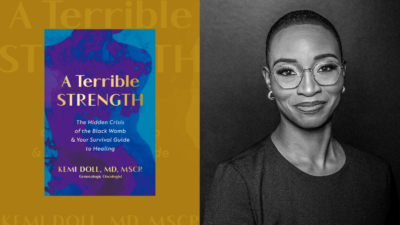 We Need to Talk About Black Women and Uterine Cancer. By Ariana Coghill / Mother Jones
A new book dives into the racial disparity that no one seems to want to talk about.
Black women have long been forced to grin and bear reproductive pain until it becomes unbearable—just like the data has been telling us: By age 50, 90 percent of Black people with uteruses in the United States report having fibroids and often have severe symptoms like anemia and intense pain. Black women are not only more likely to have uterine cancer, but twice as likely to die from it than non-Black women. Black women are also three to four times more likely to die in childbirth. It’s a crisis that transcends economic and education boundaries, with celebrities like Beyoncé and Serena Williams experiencing near-fatal pregnancy complications. Read more
Education
 Spelman College names renowned roboticist Dr. Ayanna Howard as its 12th president. By Bobby Pen / The Grio
Howard joins Spelman from The Ohio State University, where she serves as dean of the College of Engineering and holds the Monte Ahuja Endowed Dean’s Chair. Her career spans higher education, technology, entrepreneurship, and government, including previous work at NASA’s Jet Propulsion Laboratory and the Georgia Institute of Technology.
Her appointment marks a new chapter for Spelman, the nation’s top-ranked HBCU, as the college continues to focus on academic excellence, student success, and the preparation of Black women to lead in a changing world. Read more
 The Anti-DEI Era is America’s Costliest Contradiction, NCA&T Chancellor James Martin Say. By Autumn A. Arnett / Eduledger
The numbers are jarring, but Dr. James R. Martin II, chancellor of North Carolina Agricultural and Technical State University, wants Americans to sit with them: If the United States had closed its racial and gender equity gaps in education and workforce participation back in 2000, the country would have added an estimated $15 to $20 trillion to its economy.
“For us to be the best country we can be — and we’re getting our butts kicked right now by China,” Martin said in a recent interview with The EDU Ledger, “[the U.S. needs to] draw on the full capacity of our country.” Read more
 As schools close nationwide, Black students bear the greatest burden. By Megan Kuhfeld and Ayesha Hashim / The Hill
As school districts nationwide confront declining student enrollment, reduced funding, expiring pandemic relief funding and budget shortfalls, conversations about school closures and so-called rightsizing are intensifying.
From large urban systems to smaller districts, leaders are under pressure to consolidate and reduce costs while still accelerating academic recovery for students. As school districts nationwide confront declining student enrollment, reduced funding, expiring pandemic relief funding and budget shortfalls, conversations about school closures and so-called rightsizing are intensifying. From large urban systems to smaller districts, leaders are under pressure to consolidate and reduce costs while still accelerating academic recovery for students. Read more
World
 The myth of white Argentina still shapes the nation. By Federico Pita / Aljazeera
Milei is carrying forward a state tradition that has long equated whiteness with progress.
While a large majority of countries acknowledged the need to address the contemporary consequences of slavery and colonialism, a smaller bloc of governments moved to defend an international order shaped by those very same experiences. Argentina’s vote defined which side the current government has chosen to be on. That decision, however, reflects a deep historical continuity. Argentina’s rejection of reparations is part of a state-sponsored tradition that has organised the nation, since its independence, based on specific racial hierarchies. Read more
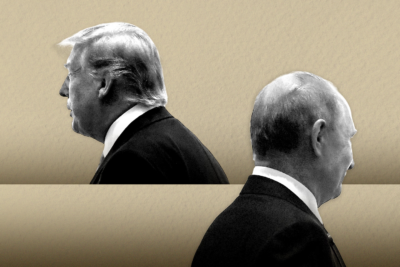 Trump and Putin both wanted a quick victory. They got forever war instead. By David Ignatius / Wash Post
Look at our battered world, and you see two presidents, Donald Trump and Vladimir Putin, caught in wars that they are struggling to finish. There’s a common theme with the Iran and Ukraine conflicts that we might call “the power trap.” These two men can’t escape the consequences of their mistakes.
Both leaders thought their enemies would capitulate in weeks. Both ignored advisers who warned that victory wouldn’t come so easily. Both still believe they can dictate the outcome, even as the chances of full success recede. Both have isolated themselves in bubbles of adulation and ignorance. Read more
Related: Iran war has no end in sight at 100 days, despite Trump’s vow. By Julia Manchester / The Hill
Related: Iran is “Trump’s Vietnam” — and it’s going to get a lot worse. By Heather Digby Parton / Salon
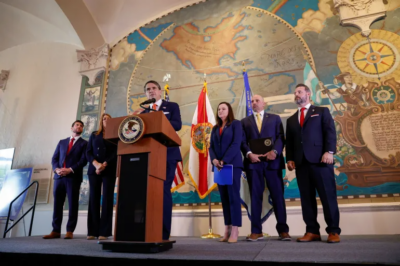 The retaking of Cuba. By Jafari S. Allen / Ajazeera
An indictment, a Supreme Court ruling and a carrier in the Caribbean: Washington is converting old confiscation claims into a legal machine for reclaiming the island.
In 1960, Cuba took its docks, sugar and power back from American owners. This May, Washington moved to take them back: it indicted Raul Castro over the 1996 Brothers to the Rescue shootdown, sailed an aircraft carrier into the Caribbean, and won Supreme Court backing for claims over confiscated property. None of this is improvised. The rollout looks chaotic, like much of the spectacle of the current US regime, but its impact is anything but. Read more
Related: The Empire Still Wants to Destroy the Cuban Revolution. By Antoni Kapcia / Znetwork
Ethics / Morality / Religion
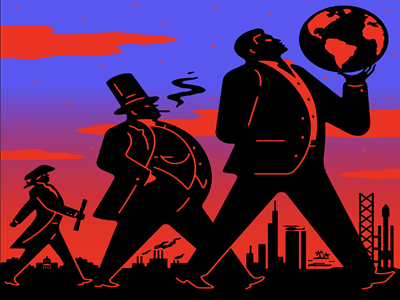 ‘All Men Are Created Equal’? Not Everyone Agrees. By Ken Phillips-Fein / NYT
This skepticism of equality can be traced at least to the era of the founders. In 1814, John Adams wrote that “to teach that all men are born with equal powers and faculties, to equal influence in society, to equal property and advantages through life” is a “fraud.”
Opposition to equality has sometimes taken on an explicitly racial character. In 1854 the pro-slavery author George Fitzhugh wrote that the Declaration of Independence’s preamble consisted of falsehoods that didn’t present a problem “until abolition arose.” People, he insisted, simply were “not born physically, morally or intellectually equal,” and therefore “their natural inequalities beget inequalities of rights.” Read more
 Pope’s slavery apology draws praise as Jesuit slaveholding legacy turns to reconciliation. By Camillo Barone / NCR
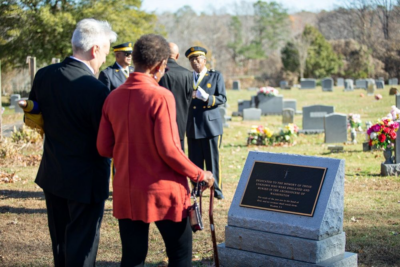
Descendants of slaves once owned and sold by the Jesuits are among those welcoming Pope Leo XIV’s formal apology for the Catholic Church’s historical involvement in slavery. The move has been largely praised by Black Catholic leaders, scholars and descendant communities as it renews debate over how fully the church has reckoned with its past. People pause to view a memorial marker to the unknown enslaved people buried at St. Peter Claver Parish’s cemetery in St. Inigoes, Md.,
The apology appears in Magnifica Humanitas, Leo’s first encyclical. While the document primarily focuses on artificial intelligence and human dignity in the modern world, one paragraph drew immediate attention for addressing slavery and the church’s complicity in it. Read more
Historical / Cultural
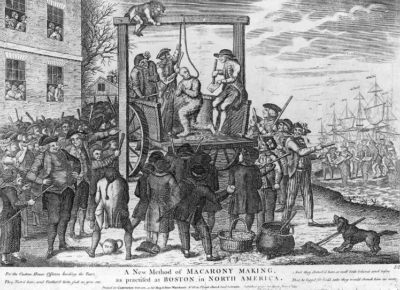 The contradictions of the American Revolution. By Gerld Horne / The Nation
In his latest book, The Great Contradiction: The Tragic Side of theAmerican Founding, Joseph J. Ellis reconsiders the essence of his oeuvre and this consensus, which is akin to the pope reconsidering Catholicism. Focusing “on two unquestionably horrific tragedies the founders oversaw”—the “failure to end slavery, and the failure to avoid Indian removal”—Ellis seeks to understand how and why they happened.
“Next to the failure to end slavery,” he writes, the “inability to reach a just accommodation with the Native Americans was the greatest failure of the revolutionary generation.” Charting not only the history of the republic’s founders but also the history that preceded and followed them, he outlines what he terms the “Great Silence”: “For more than four centuries, the most important voices of Western civilization remained mute as a highly organized program of unspeakable barbarity with genocidal implications flourished throughout Europe. Plato, Socrates, Aristotle, Aquinas, Erasmus, Locke, and all the Catholic popes regarded slavery and the slave trade as acceptable features of European society.” Read more
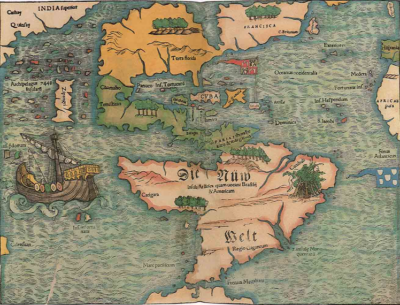 The Entwined History of Capitalism and Race in the Americas and Beyond. By Bill Fletcher Jr. / The Nation
Capital and Race is an invaluable text. In many respects, its importance resides in the centrality placed by the author on the year 1492.
Laurent does not claim that 1492 marked the beginning of capitalism; in fact, she describes capitalism as a process unfolding over hundreds of years and going through various stages, including agricultural, mercantile, and industrial. But it is in and around 1492, with the Spanish victory in the Reconquista (defeating the Moors and driving the Jews out) and the commencement of the invasion of the Western Hemisphere, that we see dramatic changes in the scale and pace of capitalist development that could have occurred only as a result of the conquest of the Americas and the introduction of the African slave trade. Read more
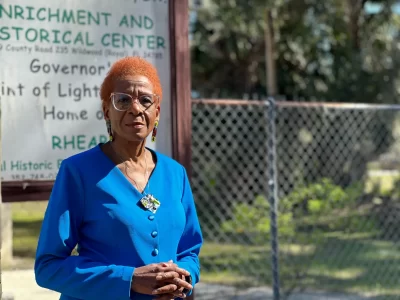 One of America’s Last Black Homesteads Is Fighting to Preserve Its Full Story. by
Capital Beverly Steele didn’t realize her hometown could be recognized for its historic significance. It’s one of the only two African American homesteading communities left in the nation. In Royal, Florida, Black families are still holding onto the inherited 40-acre plot passed down nearly two centuries ago.
It’s a rare reality in America today, given the decline of rural Black towns and land ownership. Already, Royal, about 55 miles north of Orlando, has been split in half by Interstate 75 and continues to face development threats by outsized population growth in neighboring towns. It felt even more urgent to protect the community, so Steele worked overtime to ensure the history was documented, verified, and preserved nationally. In February, it finally happened. The National Parks Services’ National Register of Historic Places listed the community of Royal on its registry. Read more
 Tulsa at a Crossroads. By Kristal Brent Zook / The Nation
On June 1, 2026, Monroe Nichols, the first Black mayor of Tulsa, made a historic announcement in what I like to call a microphone-drop moment. After months of silence and whispers about what he would do to address calls for reparations, Nichols unveiled his plans at a much-awaited ceremonial presentation at the Greenwood Cultural Center in North Tulsa, on the day that he’d recently proclaimed Tulsa Race Massacre Observance Day, a citywide holiday.
On this first day of observance, Nichols continued, “I’m announcing that my office has been working alongside our legal department on the establishment of the Greenwood Trust—a private charitable trust that will raise and facilitate the investment of $105 million in private funds along our road to repair, restoration, and righteousness.” Read more
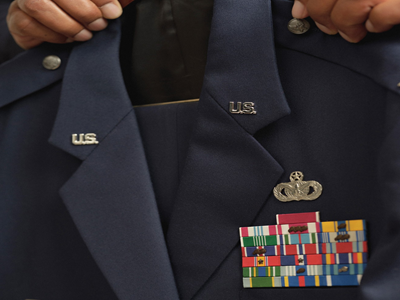 The Betrayal of Black Patriots. By Clint Smith / The Atlantic
In interviews with two dozen currently enlisted, civilian, and retired Black members of the military across the armed forces, person after person told me they have watched in dismay as a new administration has diminished and erased a proud history.
Many of the officers I spoke with were the second or third generation in their family to serve, and had children who were serving as well. Racism in the military, they were quick to remind me, is not new. Those who came before them had it much harder. At the same time, it has been difficult to see the gains of their forebears undermined so starkly in such a short period. They are concerned about the cost of this administration’s actions for individual Black service members, and for Black Americans more generally. Read more
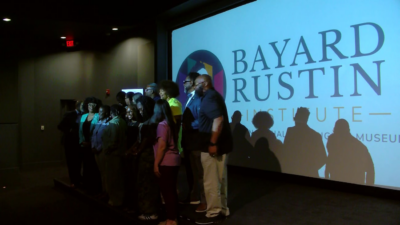 National Civil Rights Museum unveils new institute in honor of late civil rights leader.
The National Civil Rights Museum has launched a new educational institute grounded in the teachings and philosophy of the late civil rights activist Bayard Rustin.
The new Bayard Rustin Institute will be a permanent addition to the museum, designed to turn Rustin’s organizational discipline and strategy into a curriculum built for modern audiences. Rustin was a prominent civil rights leader and practicing Quaker who advocated for nonviolent civic movements and worked closely with Dr. Martin Luther King Jr. Read more
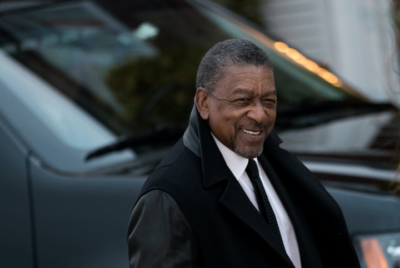 Bob Johnson Is Back at BET, but Black Ownership Is Not. By Lacy J / Baller Alert
The founder returns to a brand-new advisory board with no equity and no votes, while the Ellison family quietly holds every key to the network that built Black culture into a billion dollar business.
An advisory board advises. It does not own, it does not vote, and it does not sign checks. Bob Johnson is not getting his company back. He sold BET to Viacom in 2001 for roughly three billion dollars and became the first Black billionaire in America off that deal. There is no shame in that. But walking back through the door in 2026 as an adviser is a long way from holding equity, and the timing tells you exactly why the seat exists right now. Read more,
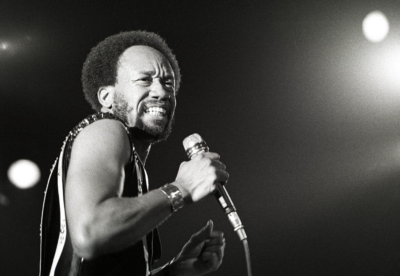 The Beautiful, Messy Legacy of Maurice White. By Shanelle Genai / The Root
Earth, Wind & Fire’s lead singer Maurice White’s life is getting renewed interest thanks to a new documentary. Let’s take a look at his impressive yet complicated life.
Thanks to the upcoming documentary, “Earth, Wind & Fire (To Be Celestial vs. That’s the Weight of the World),” which recently premiered on opening night at this year’s 25th Tribeca Festival, people online are now revisiting the iconic group’s music and dissecting the ups and downs of its leader, Maurice White. But what you may be surprised to know is that for all of White’s elevated thinking and positive way of life, his own personal story is surprisingly a bit more complicated and messy than you might believe. Read more
Sports
 With the Trump Stench Gone, the Knicks Make History. By Dave Zirin / The Nation
For the first half of Game 4, it looked like the cleansing ritual was in vain.
The odious Trump odor was still in the air, as the Knicks went down by 29 points in the third quarter. The stank was real, less because of the repugnant memory of him smirking and saluting as the boos rained down upon him during the national anthem, but more so because the New York City police insisted upon keeping up the Trump security fence that has turned the area around Madison Square Garden into a dystopian police state. Even without the president there, it took hours to enter the arena, bags were banned, and a TSA style rub-down was required before entry. Read more
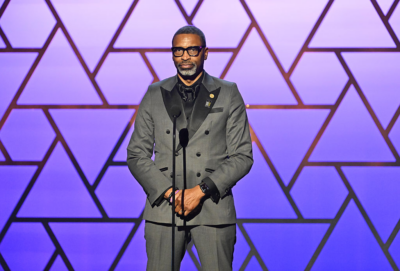 How the NAACP’s New ‘Out of Bounds’ Campaign is Changing the Recruiting Game for Black Athletes. By Cody D. / The Root
The NAACP’s ‘Out of Bounds” campaign is out to encourage elite athletes to reconsider southern universities in light of efforts to weaken Black voting power.
The NAACP is asking some of the nation’s most sought-after Black college athletes to think beyond football stadiums and consider the political implications of where they choose to play. The civil rights organization recently launched its “Out of Bounds” campaign, an initiative aimed at encouraging elite recruits to reconsider attending flagship public universities in Southern states that have taken steps to weaken Black voting power through congressional redistricting. Read more
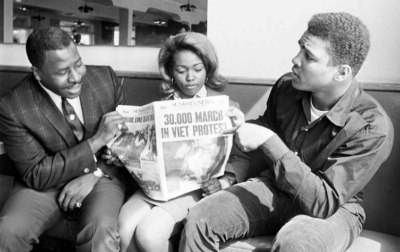 Muhammad Ali Died 10 Years Ago. We Still Feel His Loss Today. By Dave Zirin / The Nation
He was a living sign, to paraphrase the champ, that we don’t have to be the way they want us to be—and his example matters more than ever.
Incredibly, we are marking the 10th anniversary of the passing of “The Greatest,” Muhammad Ali. The heavyweight boxing champion, military draft-resister, proud anti-racist, and champion of the Palestinian people was laid to rest in Louisville, Kentucky, in June of 2016. Being present for his funeral and the celebration of his incredible life was an indelible experience. I wanted to recall that day not only to commemorate the passing of a giant but also because it speaks to what we have all collectively lost over the last decade. Read more
Site Information
On Race in America is published every Saturday. Some articles may be AI-assisted.
Articles appearing in On Race in America are archived on our Archive Page in the drop down menu. A collection of Books, Podcasts, and Video Favorites can also be found there.
On each page you can register your email to receive notifications of new editions of On Race in America
Click here for earlier Editions.
The site is fully searchable by name or topic—see the Search option at the top of the page.
At the bottom of each Blog page, you’ll find custom share buttons that let you email the Blog or post it directly to your Facebook, or LinkedIn accounts.