Featured
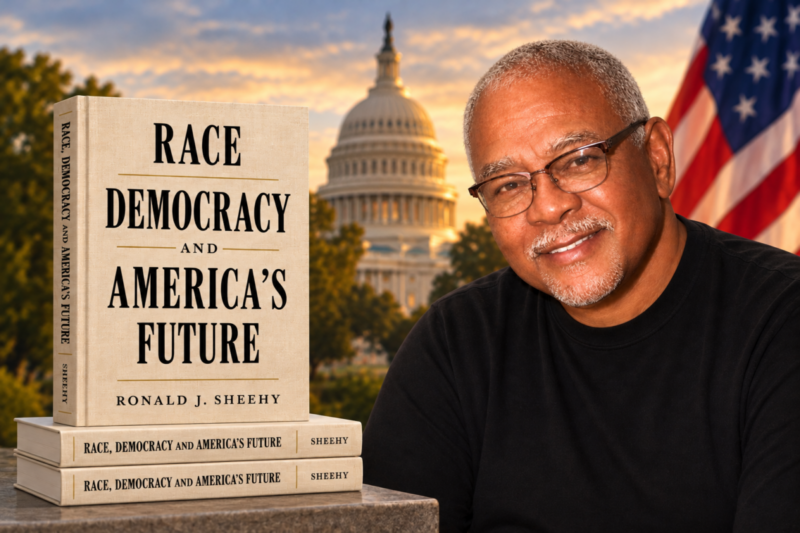 Now Available: Race, Democracy, and America’s Future. By Ronald J. Sheehy, Editor / On Race in America
I am pleased to announce the publication of Race, Democracy, and America’s Future. Drawing on history, scholarship, my own experience as a member of the last generation to come of age under legal segregation, and nearly a decade as editor of On Race in America, the book examines how race has shaped American democracy and why that history matters profoundly to the choices we face today.
Written for a broad readership, including students, educators, scholars, civic leaders, community organizations, book clubs, and general readers, the book advances a straightforward proposition: America cannot fully understand the condition of its democracy without confronting the history and continuing significance of race.
Order Race, Democracy, and America’s Future on Amazon
The Week’s Top Stories
Political / Social
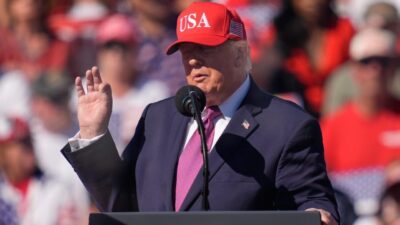 Trump’s approval rating hits record low in Fox News poll. By Mira Bhakta / The Hill
President Trump’s overall approval rating hit a record low for either of his terms, according to a new Fox News survey, amid growing voter dissatisfaction with his handling of key issues.
The Fox News poll found 36 percent of respondents approved of Trump’s overall handling of the presidency, while 64 percent disapproved. The decline, Fox News noted, was most notable among likely voters aged 45 and younger, people with an annual household income of less than $50,000, nonwhite voters and people without a college degree. Read more
Related: Trump’s racial politics shape midterm elections. By Juan Williams / The Hill
Related: Trump Is Begging to Be Impeached. By Jamelle Bouie / NYT
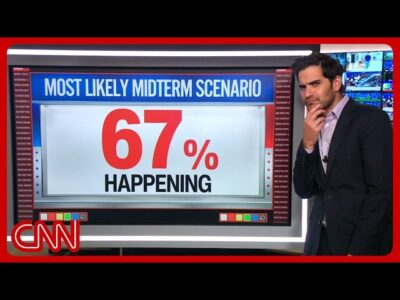 Harry Enten Predicts Exactly How The Midterms Will Play Out. By Lee Moran / HuffPost
CNN chief data analyst Harry Enten said current polling suggests there’s a 67% chance Democrats will win both the House and Senate in the 2026 midterm elections.
On the latest episode of “The Enten Scale,” released Sunday, Enten noted that the figure has jumped 15 percentage points in just two months. He highlighted strong Democratic polling in states such as Iowa, Alaska, Kansas and Michigan, while pointing to Republican candidates struggling with voters. Texas GOP Senate candidate Ken Paxton, for example, has a net popularity rating of minus 16 points. Read more
Related: Inside Elon Musk’s $276 Million Midterm Rescue Mission for Republicans. Theodore Schleifer / NYT
Related: How immigration is molding the US midterms: ‘Trump has gone too far.’ By Maanvi Singh / The Guardian
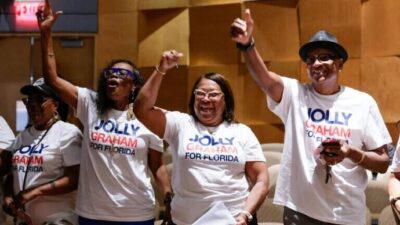 David Jolly says the ‘entire race could come down to’ undecided Black voters. by Claire Heddles / Miami Herald
Democratic gubernatorial candidate David Jolly is making a concerted effort to win over Black voters — and keep them from considering his Republican opponent Byron Donalds — in the final weeks before Election Day.
“The most important front that this entire race could come down to is the 10% of undecided Black voters in Florida right now,” Jolly told reporters in Tallahassee Monday ahead of campaign events targeted toward Black students at Florida State University and Florida A&M. Read more
Related: Voter Suppression Is Happening in the South. This Organizer Fights It. By Reveal / Mother Jones
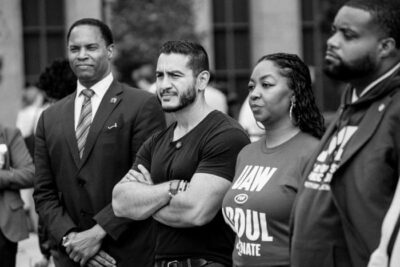 Why Abdul El-Sayed might not be winning Black voters in Michigan. By Charles M. Blow / The Guardian
Abdul El-Sayed has an impressive résumé: Rhodes scholar, professor of epidemiology at Columbia University, executive director of the Detroit health department. And, at 41, the Michigan Democratic senatorial candidate represents a new generation of politicians, a shift that he also embodies sartorially.
A Washington Post-Schar School poll released last month found that among likely Black voters, 83% said they wanted Democrats to control the Senate yet only 67% backed El-Sayed. His campaign reps attribute some of this gap to a heavily financed onslaught of negative ads run against him in the primaries, and they’re desperately trying to undo the harm. Read more
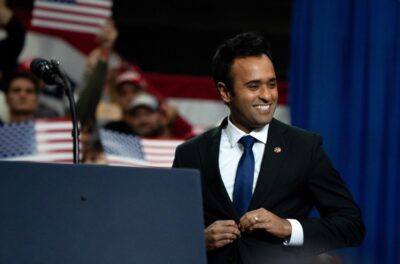 Why the right turned on Indian Americans. By Miles Bryan, Noel King and Zaid Jilani / Vox
Jilani, who recently wrote about the surge in anti-Indian racism for Vox, joined the podcast for a conversation about how he sees the bigotry as rooted in status envy, how Indian Americans and Indian immigrants are responding, and his surprisingly hopeful outlook for the future.
Below is an excerpt of their conversation, edited for length and clarity. There’s much more in the full podcast, so listen to Today, Explained wherever you get podcasts, including Apple Podcasts, Pandora, and Spotify. Listen here
 Reshaped civil rights mission at Justice Department transforms its work, workforce. By Ryan Lucas / NPR
When Harmeet Dhillon took over as the new chief of the Justice Department’s Civil Rights Division last April, the conservative attorney vowed to radically reshape the storied unit and its mission.
Over the past 18 months, Dhillon has moved aggressively to make that goal a reality. She has pushed out hundreds of longtime attorneys, replaced many of them with inexperienced ideological allies. But Dhillon, who was born in India and immigrated to the U.S. as a child, argues that over the years the division’s mission has narrowed to protecting the rights of just one segment of society: people of color. “As the logic goes, the white oppressors of years past kept Brown and Black people down, why not give them a taste of their own medicine?” she said last November at an event for the conservative Federalist Society. “That’s the thinking really that underlies a lot of our civil rights enforcement work.” Read more
 As Black wealth drops 25%, critics say Trump’s agenda is making the squeeze worse. By Gerren Keith Gaynor / The Grio
Federal Reserve data show declining Black income and net worth, while advocates warn that rising prices and policy cuts could deepen the divide.
The rising costs of living don’t appear to be going away any time soon, based on the latest inflation report. And for Black American households, the strain is most felt as a new Federal Reserve analysis found that their income and net worth are shrinking. Black household median and mean incomes decreased from 2022 to 2025, and Black net worth dropped by 25%, which is nine times lower than the net worth of white households. Read more
Related: How Trump Administration Plans to Kill the Black American Dream. By Jermaine Hall / Level
 Trump sent the military to Memphis to fight crime. Here’s what happened. By Patrick Johnson / The CSM
A federal surge cut Memphis crime, but a one-year review shows a complex reality: prior local wins, added resources, and claims of racial profiling.
Ordered into the city by the Trump administration, federal and state law enforcement agencies joined local officers to form the Memphis Safe Task Force, a multiagency operation that, by early 2026, had grown to more than 2,600 personnel and 42 teams across the city. Historians and local residents suggest that while the Trump administration’s surge may be helpful, many of the city’s struggles with crime have to do with systemic issues, such as lax gun laws, slow courts, and repeat offenders. Read more
Education
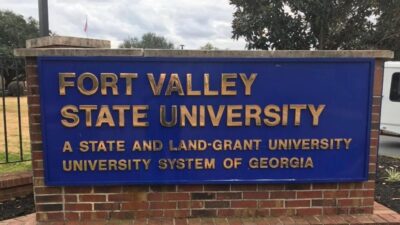 Georgia Shortchanged An HBCU $600M. Now Comes the Reckoning. By
$600M Owed: Five attorneys are taking Georgia to court to demand financial restitution for Fort Valley State University and 15 other HBCUs.
For nearly 40 years, the state of Georgia has withheld more than $600 million in mandatory funding from Fort Valley State University—its sole 1890 Black land-grant institution. Now, a historic legal challenge aims to force the state to settle a generational debt rooted in the shadow of Jim Crow-era education policy. Read more
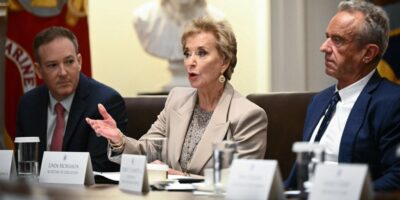 Why Trump’s HBCU Funding Boost Is Drawing Backlash From Black, Hispanic And Asian American Lawmakers. By Christopher Rhodes / Blavity
The Trump administration continues to tout its investment in historically Black colleges and universities, and while it has supported HBCUs, critics argue that this support has come at a cost to other minority-serving institutions. These critical voices are accusing Trump of attempting to divide minorities.
“HBCUs and TCUs are vital institutions that deserve robust federal investment,” the Tri-Caucus chairs said in their statement. “Rather than increasing funding for these schools, the Trump administration has decided to redirect grants intended for other institutions that support historically underserved students.” The chairs declared “we saw this same playbook last year” and called the administration’s actions “a cynical ploy to pit minority communities against each other and we won’t stand for it.” Read more
 Yale University Reports a Decline in Black First-Year Students. The Journal of Blacks in Higher Ed.
Three years after the Supreme Court’s decision to ban affirmative action in higher education admissions, Yale University has experienced a notable decline in its share of first-year Black undergraduate students.
For the Fall 2026 semester, Yale College welcomed 1,652 first-year students to campus. Among these students in the Ivy League university’s undergraduate class of 2030, 42 percent are White, 33 percent are Asian American, 12 percent are Hispanic or Latino, 10 percent are African American, and 1 percent are Native American. International students represent 10 percent of the first-year class. Read more
World
 Israelis Must Choose a Secular Nation or Theocracy. by Garry Kasparov / NYT
When Israeli voters head to the polls this month, one of the many choices they will face is whether the Jewish state leans in the direction of a secular Hebrew republic or a rigid rabbinical theocracy.
The ultra-Orthodox Haredim represent about 14 percent of Israel’s population. They nonetheless influence many aspects of daily life and benefit from generous public funding, exemptions from military service and disproportionate clout in the Knesset, the parliament.
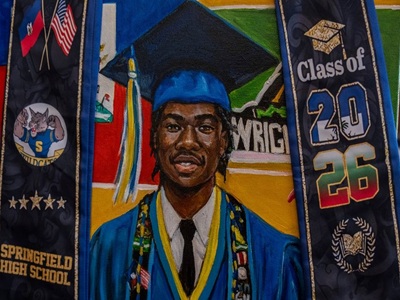 The Death of a Young Haitian’s American Dream. Edwidge Danticat / The New Yorker
Pierre Damas Bel was a twenty-year-old college student planning for his future. His family says that ICE monitoring made him lose hope.
Springfield is home to an estimated twelve thousand to fifteen thousand Haitians, who have helped revitalize the struggling post-industrial city even as Donald Trump and J. D. Vance have characterized them as dangerous interlopers who eat their neighbors’ pets. Since T.P.S. ended, ICE has been conducting regular sweeps in the city, and dozens have been detained, including three pastors. Read more
 The whites-only South African enclave that is growing in popularity. By Imogen Garfinkel / Daily Mail
Thirty-two years after the fall of apartheid, black South Africans are barred from living or working in the town of Orania.
Situated along the Orange River in the Karoo region of the Northern Cape province, this entirely white town is a disturbing vestige of decades of government-sanctioned racial segregation. In this hamlet of 3,000 inhabitants that was built on 8,000 hectares of farmland, entry is exclusively granted to Afrikaners, an ethnic group descended from predominantly Dutch settlers who first arrived at the Cape of Good Hope in 1652. Read more
Ethics/ Morality / Religion
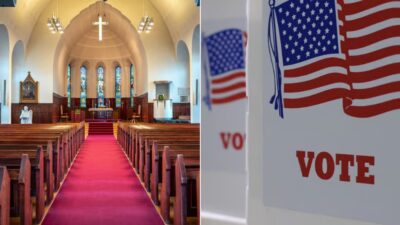 From the pew to the polls: How changes in Black worship are reshaping Black politics. By Haniyah P. / The Grio
As the midterms near, activists and religious experts explain why faith and politics have never been separate in the Black community.
This week, pastor Phillip Anthony Mitchell made headlines for gathering 80,000 people for an hour of prayer at AT&T Stadium in Texas. “Philip Anthony Mitchell is just an emblem of a much, much, much deeper problem,” she said. “He’s not the virus. He’s the symptom.” “We’ve been noticing a trend, in particular, to undermine the power of Black institutions, in part through putting a shiny veneer on white evangelical theologies to appeal to Black people, who once upon a time would have helped fuel the Black Church as both a religious institution, but also as a socio-political institution,” she added. Read more
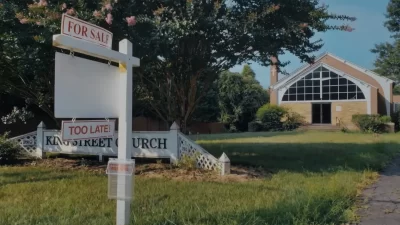 Review: ‘Christianity at a Crossroads.’ By Myles Werntz / Christianity Today
The new PBS documentary forecasts a church complicated by partisan politics, but not without hope.
Any number of recent surveys indicate an upheaval in American Christianity. Political scientist Ryan Burge’s work, which has set the pace for several years now, alongside studies by the Pew Research Center and the Public Religion Research Institute, provides a sober assessment of what our congregations, whether historic mainline denominations or nondenominational megachurches, will look like in the years ahead. Read more
 Is the Declaration of Independence a Christian Document? By John Fea / Christianity Today
An excerpt from In God We Trust: Was America Founded as a Christian Nation?
In July 2020, Louisiana congressman Mike Johnson penned an op-ed celebrating American independence. “A century ago,” he stated, “the great English writer G.K. Chesterton famously observed that ‘America is the only nation in the world that is founded on a creed. That creed is set forth with dogmatic and even theological lucidity in the Declaration of Independence.’” Read more
Historical / Cultural
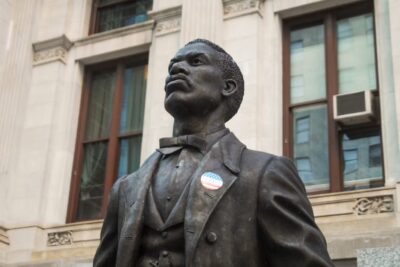 Murder of Black suffrage leader Octavius Catto reveals why Election Day 1871 was one of the most violent in Philadelphia history. By Timothy Welback / The Conversation
Octavius Valentine Catto died as he lived, advocating for a more equitable society. Accordingly, the city of Philadelphia has decided to honor his legacy – again.
Octavius Catto was born in Charleston, South Carolina, in 1839 to a free Black woman named Sarah Isabella Cain and a formerly enslaved man named William Catto, who purchased his freedom and later became a Presbyterian minister. Octavius Catto spent his formative years and subsequently launched his career as a public servant in Philadelphia. He attended the Institute for Colored Youth – now Cheyney University – and graduated at the top of his class in 1858. Read more
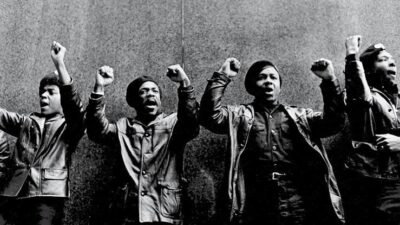 Black Panther Party stalwarts to celebrate 1966 founding, programs aided the poor. By Corey Williams / ABC News
The legacy of the Black Panther Party lives on six decades after its founding, in the work of a Seattle medical center started to address systemic health disparities in the African American community
As the celebration begins Thursday for the Black Panther Party’s Oct. 15, 1966, founding in Oakland, California, former members are looking beyond the iconic black leather jackets, berets and clenched fists to highlight programs aimed at healing disenfranchised and forgotten communities. Read more

What is Indigenous Peoples Day? 3 things to know. By AP and PBS
Indigenous people celebrate their centuries-long history of resilience with ceremonies, dances and speeches.
Former President Joe Biden officially commemorated Indigenous Peoples Day in 2021. An increasing number of states and cities have also recognized it — pivoting from a day long rooted in the celebration of explorer Christopher Columbus to one focused on the people whose lives and culture were forever changed by colonialism. Here is a look at why it’s called Indigenous Peoples Day and how people celebrate. Read more
Related: Indigenous People Are Resisting Erasure From Schools, Media, and Our Land. By Johnnie Jae / Truthout
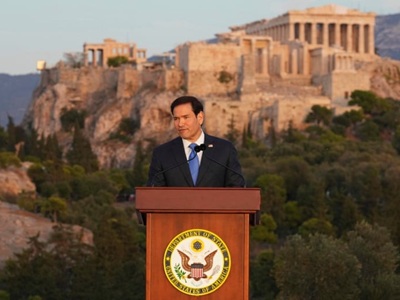 Marco Rubio is promoting troubling ideas about ‘western civilization.’ By Ted Widner / The Guardian
In a recent visit to Greece, the secretary of state suggested that Europe must rediscover the values of conquest and expansion
Rubio’s speech was not quite as dismissive of Europe as a previous one he gave, in February, warning of “civilizational erasure”. At the foot of the Acropolis, he extended an olive branch, saying: “We believe that Europe can awaken from its long slumber and rekindle the fire that was here millennia ago.” Read more
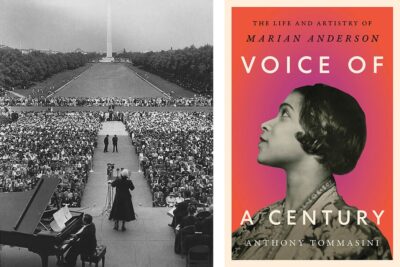 Her onstage singing voice advanced offstage racial reform. By Barbara Spindel / The CSM
In 1952, Marian Anderson sang in Washington, where she first performed in 1939. Anthony Tommasini’s biography, “Voice of a Century” (Penguin Press, 352 pp.), chronicles the barriers Anderson faced as a Black musical artist.
Marian Anderson was already a world-famous contralto when she was barred from singing at Washington’s Constitution Hall in 1939. Anderson was Black. The National Society Daughters of the American Revolution (DAR), the organization that owned the venue, only permitted white artists to perform there. Read more
Sports
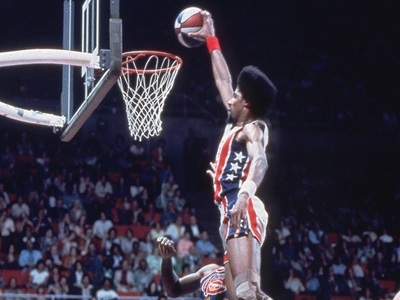 Legends Who Changed Basketball: The Greatest Black Stars in ABA History. By Rashad Grove / The Root
50 years after its merger with the NBA, we’re looking at the Black stars who redefined basketball and turned the ABA into an arena of unforgettable talent.
The American Basketball Association was defined by its vibrant energy, fast pace, and above-the-rim athleticism, a culture spearheaded notably by its transcendent Black superstars. From 1967 to 1976, these trailblazers brought unmatched style, swagger, and playmaking to the court, ensuring that the legacy of Black excellence in the ABA permanently reshaped modern basketball. In honor of the 50th anniversary of the 1976 ABA–NBA merger, here are the best Black ABA players in history. Read more
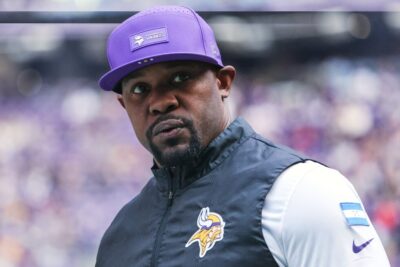 Recruiting firm’s Brian Flores memo contains racial stereotypes, lawyers say. By ESPN
“The recently unsealed documents demonstrate two unfortunate, but unsurprising, realities,” Flores attorney Douglas H. Wigdor told Front Office Sports, which also published a copy of the Korn Ferry memo.
“First, that Mr. Flores’ decision to hold the league and its teams accountable for systemic race discrimination has been met with unlawful retaliation. Second, discrimination continues to play a significant role in the hiring process for NFL Head Coaches, as evidenced by the fact that the candidate profile prepared for the Raiders leans heavily on racial stereotypes.” Read more
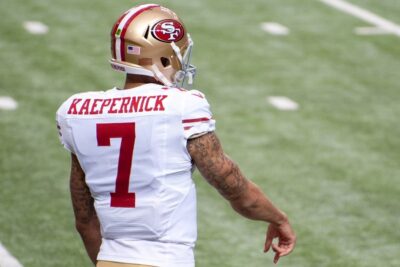 The Perilous Fight. By Takashi Williams / The Progressive Magazine
Colin Kaepernick reclaims his narrative a decade after taking a knee
It’s now been a decade since Kaepernick took the knee, and he hasn’t walked onto an NFL field since. His absence from the league, and, coincidentally, the public spotlight, loosened control over his narrative and left those of my generation in the dark about the significance of what really transpired. Working alongside Academy Award nominee Ava DuVernay on Netflix’s Colin in Black and White in 2021, Kaepernick captured control of his narrative onscreen. Now, those—like me—who were too young to fully interpret his protests at the time have another way of understanding. Working on his own terms alongside Nick Chiles, Kaepernick regains control once again in his new memoir, The Perilous Fight. Read more
Site Information
On Race in America is published every Saturday. Some articles may be AI-assisted.
Articles appearing in On Race in America are archived on our Archive Page in the drop down menu. A collection of Books, Podcasts, and Video Favorites can also be found there.
On each page you can register your email to receive notifications of new editions of On Race in America
Click here for earlier Editions.
The site is fully searchable by name or topic—see the Search option at the top of the page.
You can contact the editor by emailing onraceinamerica@gmail.com
At the bottom of each Blog page, you’ll find custom share buttons that let you email the Blog or post it directly to your Facebook, or LinkedIn accounts.