Featured
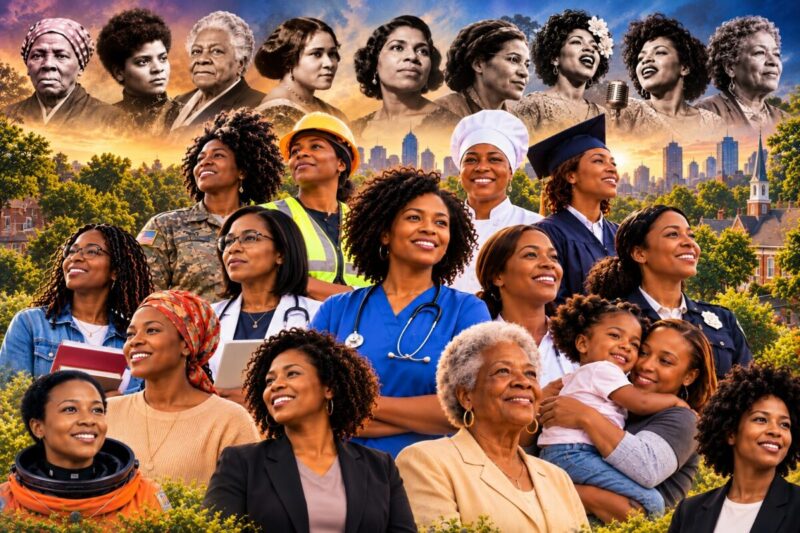 Celebrating African American Women. By Ronald J. Sheehy, Editor / On Race in America
I was literally brought to tears reading about Sharon Davis, an African American woman who, after 24 years of service at the Food and Drug Administration, was unceremoniously fired without cause. According to Lottie L. Joiner, writing in Capital B, Davis experienced a mixture of emotions: anger, disbelief, and, most prominently and undeservedly, shame. I imagined that Sharon was someone’s grandmother, mother, aunt, or sister.
Sharon Davis’s experience was hardly isolated. African American women have been disproportionately affected by federal workforce reductions and the dismantling of diversity, equity, and inclusion initiatives under the Trump administration. These actions are part of what Rachel Maddow described as a broader pattern of targeting African Americans. The consequences extend beyond women, as illustrated by recent reporting in The New York Times on Black unemployment. For African American women, these developments are painful reminders of the undeserved suffering that has characterized much of their history in this country.
My life has been shaped by generations of African American women. My great-grandmother, Granny Rosa, was born into slavery, and I knew her personally. My grandmother, Berta Hart, was born shortly after Reconstruction. My aunt, whom I affectionately called Auntie, was my mother’s older sister. Both women were born during Jim Crow and remained guiding presences in my life until their deaths.
These women were the primary source of education for children, and provided comfort and security during difficult times. They cultivated aspirations and prepared succeeding generations for opportunities they could only envision. My wife’s family history reflects a similar trajectory, as do the histories of countless other African American families.
Among those whose extraordinary achievements helped shape American history were Harriet Tubman, who symbolizes the struggle for freedom; Ida B. Wells, the courage to confront racial injustice; Mary McLeod Bethune, the transformative power of education; and Madam C. J. Walker, entrepreneurial achievement. Marian Anderson challenged racial barriers in the arts; Rosa Parks and Fannie Lou Hamer advanced the struggle for civil rights and political equality; Katherine Johnson demonstrated scientific brilliance; and Shirley Chisholm broke barriers in American politics. More recently, Mae Jemison carried that legacy into space exploration, while Ketanji Brown Jackson reached the nation’s highest court.
Toni Morrison and Maya Angelou, through literature and poetry, and Billie Holiday and Aretha Franklin, through music, helped shape American culture. Along with countless other African American women, they made contributions that have been both enduring and consequential.
Americans celebrate an extraordinary variety of people, events, achievements, and traditions. Yet few groups are more deserving of recognition than African American women. Their contributions to our families, communities, and nation warrant an annual occasion devoted specifically to honoring their place in American life.
While existing observances recognize the achievements of African American women, I propose that we establish African American Women’s Day—a broader annual community tradition that combines celebration with reflection and honest dialogue about the challenges facing African American women, men, and families. We need opportunities to examine not only the injustices imposed by society, but also our collective responsibilities for strengthening families, nurturing self-esteem, expanding opportunities, and preparing future generations for the challenges ahead.
I also propose that African American Women’s Day be celebrated annually on the first Sunday in March, during Women’s History Month. It would provide an opportunity to honor the achievements, resilience, and promise of African American women. It need not be a national holiday established by government decree, but rather a day of recognition, reflection, and renewal embraced by the African American community.
Let us establish a tradition that honors the women who helped shape our past, celebrates those who are shaping our present, and encourages the conversations necessary to secure a better future for generations to come.
A Call to Action: Share this essay with your pastor, religious leaders, and community organizations to encourage discussion about establishing African American Women’s Day as an annual celebration of recognition, reflection, and renewal.