Featured
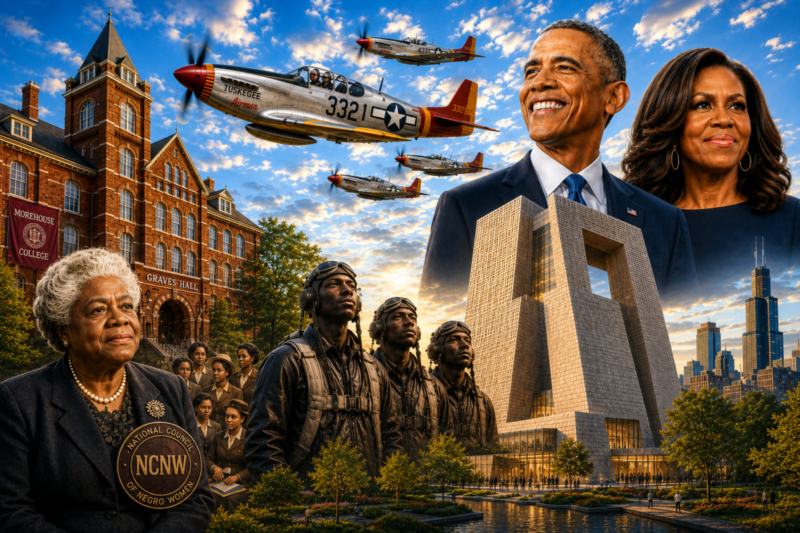 Excellence and the Meaning of Greatness. By Ronald J. Sheehy, Editor / On Race in America
For generations, African Americans have pursued freedom and democracy through the deliberate cultivation of excellence. Black excellence and humanity, forged through trial and tribulation, remain a powerful testament to America’s highest ideals and brightest possibilities.
Read complete essay. Excellence and the Meaning of Greatness. By Ronald J. Sheehy, Editor / On Race in America
The Week’s Top Stories
Political / Social
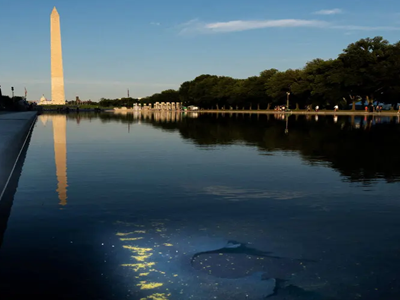 President Narcissus and the Fetid Reflecting Pool. By Michelle Cottle / NYT
Public service announcement for anyone planning to visit Washington in the immediate term: Steer clear of President Trump’s hot mess of a reflecting pool. Don’t dip a digit in its emerald water. Don’t play with its “American flag blue” strips of peeling paint. Don’t get too close to the federal workers struggling to repair this refurbishment from hell. In fact, maybe skip the landmark altogether, lest you, too, get cuffed and hauled off by the park police for allegedly desecrating the president’s most half-baked vanity project to date.
As with the White House ballroom brouhaha, we see the power of vivid images and simple metaphors. Workers vacuuming algae out of the pool, oily green slime, a dead duckling floating in the muck — these visuals can capture the public imagination, even among Americans largely fed up with and tuned out of politics. Read more
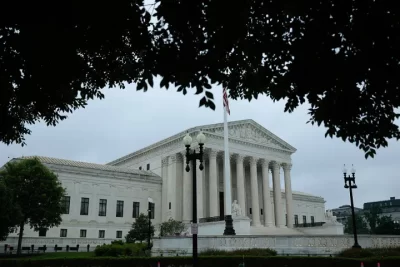 Every Supreme Court Ruling That Impacted Black Americans This Week. By Shannon Dawson / Newsone
The Supreme Court handed down a trio of landmark decisions this week that profoundly affected the Black community in the United States.
The U.S. Supreme Court issued several major rulings this week that could have significant implications for Black Americans, spanning religious rights in prison, police encounters, and further limitations on the enforcement of the Voting Rights Act. Here’s a breakdown of the three key rulings and what they mean. Read more
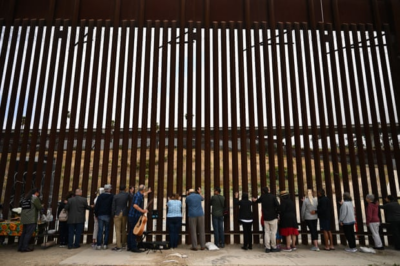 Supreme court lets Trump turn back asylum seekers at US-Mexico border. By Maanvi Singh / The Guardian
The supreme court has given the Trump administration a green light to block asylum seekers at the US-Mexico border, in a decision that fundamentally reshapes the US asylum system.
The decision allows the Trump administration to revive its so-called turn-back or “metering” policy, allowing federal agents at the US border to stop migrants from physically setting foot on US soil, where federal law guarantees them the right to claim asylum and protection from persecution. Read more
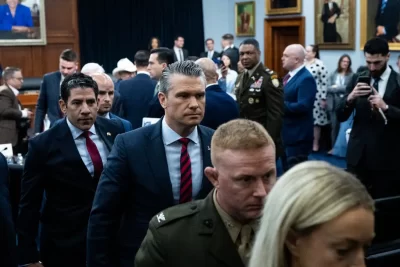 Secret Vetting and Blocked Promotions: Inside Hegseth’s War on Diversity. Greg Jaffe and Kate Kelly / NYT
A Black admiral fixed one of the Navy’s worst messes. Mr. Hegseth blocked his promotion anyway.
The Navy’s top leadership believed that Rear Adm. Stephen D. Barnett was by far the best choice to lead the command that oversees the Navy’s bases at home and abroad. The officer, however, had a big strike against him. Like other Black military leaders, he had been encouraged by his superiors to help the Navy recruit and retain minority officers, who remain significantly underrepresented in the force. His years-old remarks on the importance of diversity had been flagged in a secret vetting process designed to weed out senior leaders whom Mr. Hegseth and his team pegged as a problem. Read more
 The Rising Movement to Overturn Karmelo Anthony’s Extreme 35-Year Sentence. By Phenix S. Halley / The Root
Weeks after Karmelo Anthony was sentenced to 35 years in prison for the fatal 2025 stabbing of Austin Metcalf, a growing coalition of attorneys, civil rights advocates and grassroots supporters mobilized to challenge the conviction and push for a new trial.
The case has become one of the most closely watched and divisive criminal proceedings in the country as the verdict sparked fierce debate online and within civil rights circles about whether Anthony received a fair trial. Read more
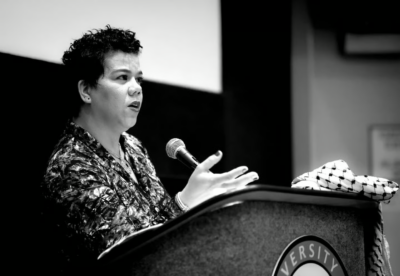 How Dr. Rosa Clemente’s online seminar confronts anti-Blackness in Puerto Rican and Latino communities. By Jahaura Michelle / The Grio
Clemente’s five-week online seminar explores Black Puerto Rican history, political organizing and the realities of anti-Blackness.
For years, Dr. Rosa Clemente has watched conversations about Black-Latino identity become more visible across social media, academia and popular culture. But visibility alone, she argues, does not address the anti-Blackness many Black Latinos continue to encounter within their own communities. Read more
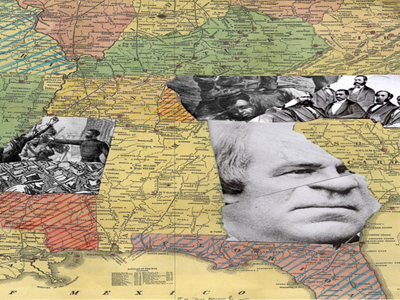 The white working class knows the American project isn’t working. Here’s why that will never matter to them. By Saida Grundy / The Guardian
Access to power over other racial groups is their preferred political currency
The assumption that economic angst drives political loyalties for the white lower classes inaccurately assumes that they are chiefly interested in economics as the reward for their vote. In reality, access to power over other racial groups is their preferred political currency. When presented with proposals of a multiracial democracy, and in instances when governments were seen as responsive to Black social movements, working and poor whites have repeatedly supported politicians that champion successive tax cuts for the rich, slashed spending marked for low- and modest-income Americans, and authorized anti-Black and anti-immigrant policies that exclusively benefit the wealthiest white Americans. Read more
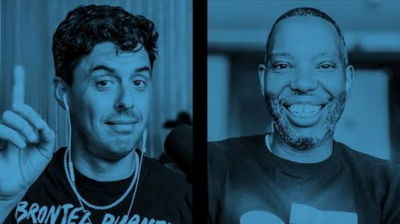 Ta-Nehisi Coates: Obama’s Legacy in a Trump World. By Tim Miller / The Bulwark
Obama never thought Trump could win in 2016, perhaps because he underestimated how much the opposition loathed him. At the opening of his new presidential center on Thursday, he spoke of presidents acting with duty, honor, and kindness—even though the current occupant at 1600 Pennsylvania Avenue is all about destroying things, being mean, hurting people, and starting dumb wars.
Ta-Nehisi Coates joins Tim Miller for the Juneteenth holiday weekend pod. Listen here
Education
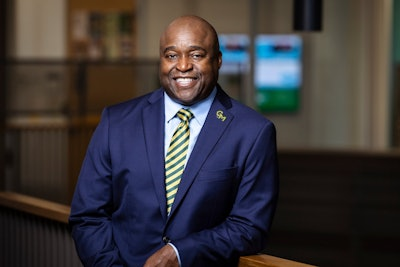 Defying Political Headwinds, George Mason Rewards President Gregory Washington with 4-Year Extension. By Jatika Hudson / Eduledger
George Mason University’s Board of Visitors recently extended the contract of President Gregory Washington, locking in his leadership through June 30, 2031. His previous agreement was set to expire in June 2027.
After his 2020 appointment as the eighth president of the university, and first black president in the school’s 77-year history, Washington became a target of the Trump administration’s attacks on diversity, equity, and inclusion. But despite the political turmoil, the exponential growth George Mason University has experienced under Washington’s leadership was hard to argue against; in his time as president, the university welcomed its largest and most diverse student cohorts — in 2025, enrollment reached 40,000, a record high for Virginia public colleges. Read more
 Professors Can Teach About Race in Kansas — If They Follow These Rules. By Amann Mahajan / The Chronicle of Higher Ed.
In what’s becoming a familiar exercise, the Kansas Board of Regents just spent weeks wrestling over how to define “diversity, equity, and inclusion/critical race theory” content that cannot be part of required courses under a new state law.
The final definition approved Wednesday leaves substantial room for discussions about race in public university classrooms, while still raising prickly questions about what faculty can and can’t teach. Read more
World
 Thomas L. Friedman on the Clash at the Core of the Iran Deal. Thomas L. Friedman and Daniel J. Wakin / NYT
How the world views of Jared Kushner and the founder of the Islamic Republic of Iran can help explain the issue at the heart of the negotiations.
The divide between Iran and America is, the Opinion columnist Thomas L. Friedman argues, ultimately about the difference between “Kushnerism” (named for the president’s son-in-law Jared Kushner) and “Khomeiniism” (named for the founder of the Islamic Republic of Iran). In conversation with the Opinion editor Dan Wakin, Friedman explains what he means and discusses what he sees as President Trump’s recent string of failures. Read more
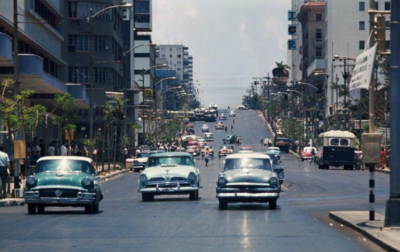 The American Fantasy of Cuba. By Jafari Sinclaire Allen / The Nation
We want to see Cuba as the pleasure colony of the past. Today, it’s more of a country on the brink of collapse.
To write about Cuba in the United States is often to scream into an abyss whose only echo is the Buena Vista Social Club’s “Chan Chan” playing on a loop. The opening guitar lick. The bass walking under it. The chorus we’ve all heard, whether or not we have ever set foot in Havana. The nation I am addressing, which picks up the books and op-eds and dispatches from the island, wants Cuba as a soundtrack—background music. It wants peeling paint and vintage cars, heavyset Black abuelas with cigars, and dark rum that goes with the dancing. It wanted to go to the island before it changes. It wanted to go before the end. Read more
Related: Cuba’s Fuel Crisis Brings Schools to a Standstill. Ed Augustin and Frances Robles / NYT
 Julián Quiñones, Blackness in Mexico and the complexities of national identity. By Raul Vilchis / The Guardian
Two years ago, Quiñones was the target of racist chants by fans. Now, hailed as a hero in that same country, he’s challenging expectations of race and identity
Karma Frierson, who teaches Black studies at the University of Rochester and has written about Black culture in Mexico, said the discourse around Quiñones’s goal, and the fact that he is Black, was one of surprise. “This surprise speaks to the expectations people still have about what a Mexican person looks like. So, you have this dissonance,” she said. “You know that the player, by virtue of wearing the jersey is of that nationality, but you never imagined that person would look a certain way.” Read more
 UN Commission Finds 30 Percent of People Killed in Gaza Genocide Were Children. By Stephen Prager / Truthout
“The deliberate targeting of children is one of the key elements establishing genocidal intent,” the commission said.
The report, authored by the UN Independent International Commission of Inquiry on the Occupied Palestinian Territory, follows a previous finding in September that Israel’s actions in Gaza constituted genocide. Between the start of Israel’s military campaign in October 2023 and the “ceasefire” agreement in October 2025, the report found that more than 20,000 children were killed, while more than 44,000 were injured. Among those killed, more than 5,000 were under the age of five, more than 1,000 were under the age of one, and more than 400 were newborn babies. Read more
Ethics / Morality / Religion
 Who belongs in America? Five faith leaders on immigration, identity and America’s 250th. By Pam Kruger / RNS
As the United States marks its 250th anniversary, debates over national identity, religion and immigration have intensified. Was America founded as a Christian nation? A pluralistic democracy? A nation of immigrants? Who belongs, and who gets to decide?
In 2026, these questions are not abstractions as America grapples with an immigration crisis. Immigrant and faith communities have been on the front lines, navigating the federal enforcement system, shaping public opinion and wrestling with questions of responsibility and morality. Religion News Service asked five prominent faith leaders and thinkers to weigh in. Their answers, in a new five-part video series beginning Thursday (June 25), are not uniform. Their perspectives reflect their different religious traditions, immigration experiences and personal visions of what America is and should be. Read more
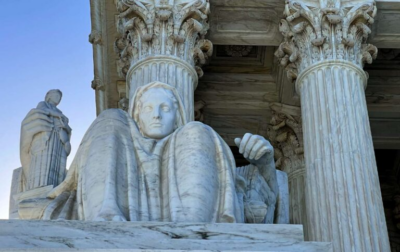 The Supreme Court Loves Religious Freedom—Just Not for Rastafarians. By Elie Mystal / The Nation
In a far-reaching ruling, the court violated a man’s constitutional rights—and undermined fundamental civil rights protections.
On Tuesday, in a 6–3 ruling that broke along fascist–Democrat lines, the court managed to ignore a blatant violation of a prisoner’s constitutional rights and neutered an entire federal law meant specifically to protect people in prison. And then, just for good measure, it continued its assault on congressional authority. The case the Republicans used to do all this is called Landor v. Louisiana Department of Corrections. It involves the harrowing experience of Damon Landor, who was serving a short prison stint—just a few months—for drug possession. Landor is Rastafarian. As part of his faith, he is required to grow his hair into dreadlocks and not cut it. Read more
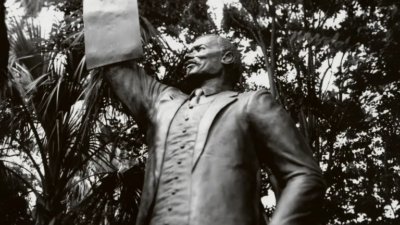 The Baptist Who Made Juneteenth a Holiday. By Jessica Janvier / Christianity Today
In the 1970s, with endurance and diplomacy, lawmaker Albert Edwards pushed Texas to recognize slavery’s end. A nine-foot statue of Al Edwards, who proposed the 1979 legislation to make Juneteenth a Texas State holiday, on the grounds of Ashton Villa.
In the summer of 1865, the good news of freedom finally came to more than 250,000 slaves in Texas. Union troops gathered in the city of Galveston and read a general’s order to the public: “The people of Texas are informed that, in accordance with a proclamation from the Executive of the United States, all slaves are free.” More than a century later, Albert Ely Edwards, a Baptist minister and a Texas state legislator who was a veteran of the Civil Rights Movement, pushed for Texas to recognize the importance of that June day. Read more
Historical / Cultural
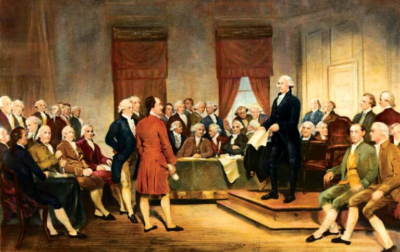 Will America Ever Give White-Man Rights To Everyone Else? By Elie Mystal / The Nation
If we want to make it another 250 years, the Constitution is going to have to do a lot more than protect individual political and civil rights.
Two hundred and fifty years ago, wealthy white men in the process of colonizing the North American continent declared their independence from the wealthy white men who’d sent them to do the colonizing. Their fundamental disagreement was over which group of white men had the right to profit most from their joint subjugation of other humans. Eventually, the American colonists triumphed over the British venture capitalists. Read more
Related: The Celebration of the Nation’s Birth Is Still a Sham. By Madiba K. Dennie / The Nation
Related: 250 Years of Genocide, Theft, and Displacement. By Simon Moya-Smith / The Nation
Related: America Is Due a Third Reconstruction. By Michelle Goodman / The Nation
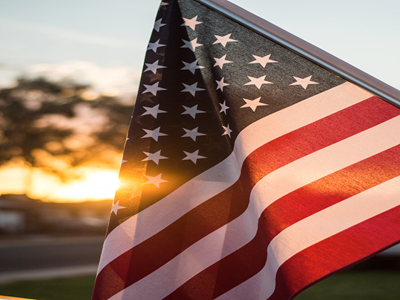 The Dangerous Kindness of Erasing Slavery. By Wayne Ince / Level
By omitting slavery’s machinery, a celebratory booklet erases the stakes of Black resistance and hands children a heroism stripped of its meaning.
There’s particular kind of coward who doesn’t argue with history. He just edits it. That’s what we’re looking at with this 85-page “American Heroes” document, rolled out by a MAGA-aligned outfit ahead of the country’s 250th birthday. Eighty-five pages of heroes. Eighty-five pages of the people they want our kids to draw for an art contest. And somewhere in all those pages, the single largest moral catastrophe in American history was the enslavement of millions of Black men, women, and children that just quietly vanishes. Not debated. Not contextualized. Erased. Read more
Related: What Should Be Done With America’s Slave Mansions? By Aaron Ross Coleman / The Nation
 Lessons From the People’s Historian, Howard Zinn. By Dave Zirin / The Nation
His take on history arms youth with the courage to “transform the world.” It’s no wonder the right aims to erase it.
Despite the fact that the protests against structural violence and racism had been largely peaceful, with masses of demonstrators asserting their right to assemble and petition for the redress of grievances, Trump used his September 2020 address at the National Archives Museum to go after the radical historian who told the real story of America. Read more
 What is Día de los Negros? The Juneteenth celebration that Black Seminole descendants have kept alive in Mexico for over 100 years. By Odafe Oghen / The Grio
As millions of people across the United States mark Juneteenth on June 19, a small community in northern Mexico holds its own version of the same celebration, one that predates the federal holiday by decades. Did you know that there is a Juneteenth flag? Shown
The Día de los Negros explainer starts in El Nacimiento de los Negros, a village in Coahuila, Mexico, where the Mascogos, descendants of Black Seminoles who escaped enslavement in the United States, have commemorated June 19 for over 100 years. Read more
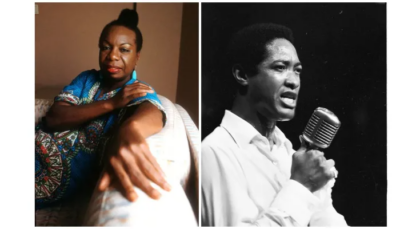 Nina Simone, Sam Cooke, And What Black Artists Sacrificed To Make Pro-Black Art. By Zack Linly / Newsone
Nina Simone and Same Cooke are two Black artists who decided the message was more important than their commercial success.
June is, among other things, Black Music Month, and if we’re going to talk about Black music, we have to talk about protest music. But if we’re going to talk about protest music, we have to talk about sacrifice, and if we’re going to talk about Black music, protest music and what was sacrificed to make it great, we have to talk about Nina Simone and Sam Cooke, two artists who decided the message was more important than their commercial success. Read more
Sports
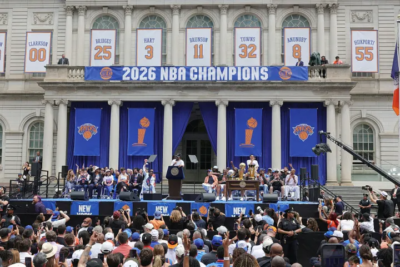 Despite The Fanfare Surrounding Their NBA Title, History Won’t Be Kind To Knicks Players Who Visit Trump. By Carron J. Phillips / Newsone
James Dolan sold his roster out by accepting the president’s invite. Now it’s up to the players to decide whether to continue the silent White House boycott.
Talent isn’t why the New York Knicks are NBA Champions — heart is. But, in the coming weeks, we’re going to find out just how tough this group of players really is. Will an almost all-Black team led by a Black coach show up at the residence of a man who leads arguably the most racist administration this country has ever endured, just because their white owner accepted the invite, or nah? We’ll know soon enough which of these Knicks are “about that life.” Read more
Related: Letitia James to Knicks: The White House Trip Is Optional. By BET
Related: The Difference Between the Knicks and the White House Cage Fight. By Adam Gopnik / The New Yorker
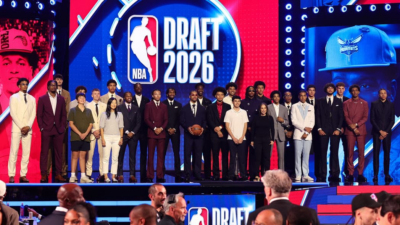 The Biggest Moments From the 2026 NBA Draft. By Rashad Grove / The Root
The newest NBA stars arrived at the Barclays Center for the 2026 NBA draft. We’re breaking down all of the surprises.
The 2026 NBA Draft officially tipped off on June 23 at the Barclays Center in Brooklyn and featured the latest crop of talent entering the league. With a highly anticipated, top-heavy class, this year’s two-day, 60-pick event delivered exactly what basketball fans love: franchise-altering talent and a masterclass in modern tunnel style. From the crowning of the number one pick to the late-first-round steals, the next generation of hoops stars has officially arrived. In what may go down as one of the most talented draft classes in NBA history, here are the top storylines from the 2026 NBA Draft. Read more
 ‘This is not a drill’: Serena Williams is returning to Wimbledon singles. By Bobby Pen / The Grio
The 23-time Grand Slam champion accepted a wild-card invitation into the ladies’ singles draw, meaning she’ll compete at Wimbledon in both singles and doubles with Venus Williams.
The 44-year-old tennis icon is officially returning to singles competition at Wimbledon after accepting a wild-card invitation into the ladies’ singles draw. According to ESPN, the All England Club announced Sunday that Williams will compete in singles at this year’s tournament, marking her first singles match since the 2022 U.S. Open. Read more
Site Information
On Race in America is published every Saturday. Some articles may be AI-assisted.
Articles appearing in On Race in America are archived on our Archive Page in the drop down menu. A collection of Books, Podcasts, and Video Favorites can also be found there.
On each page you can register your email to receive notifications of new editions of On Race in America
Click here for earlier Editions.
The site is fully searchable by name or topic—see the Search option at the top of the page.
At the bottom of each Blog page, you’ll find custom share buttons that let you email the Blog or post it directly to your Facebook, or LinkedIn accounts.